

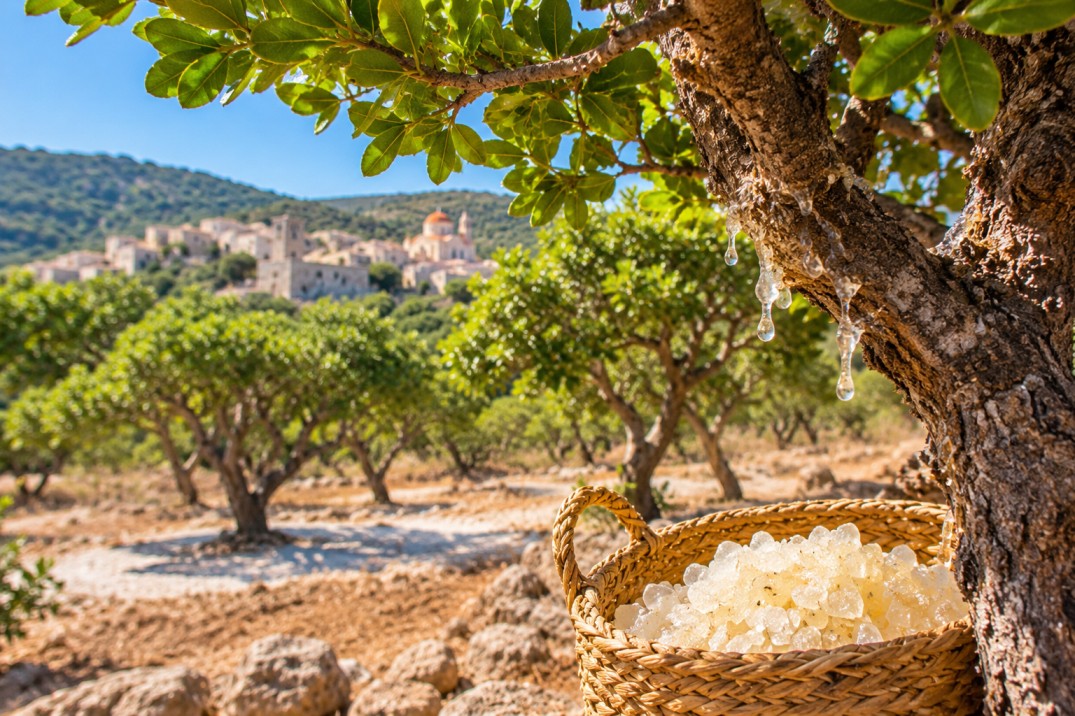

In the southern part of Chios, a landscape of medieval villages, stone-built houses and fragrant mastic trees reveals one of Greece’s most distinctive traditions. Known as the island’s natural treasure, Chios mastic has shaped the region’s history, local economy and cultural identity for centuries, offering visitors a unique way to discover the island beyond its beaches.
The 24 traditional Mastic Villages, collectively known as Mastichochoria, are among the most fascinating places to explore in Chios. Developed during the Genoese period, these fortified settlements were designed to protect both their inhabitants and the valuable mastic production. Today, their narrow cobbled streets, stone arches and traditional architecture create an atmosphere that feels like stepping back in time.
Among the most remarkable villages is Pyrgi, famous for its distinctive black-and-white geometric decorations, known as xysta, which adorn the facades of its houses. Nearby, Mesta impresses visitors with its beautifully preserved medieval layout, labyrinth-like alleys and atmospheric central square. Olympoi and Kalamoti are also worth exploring for their traditional architecture and connection to the island’s agricultural heritage.
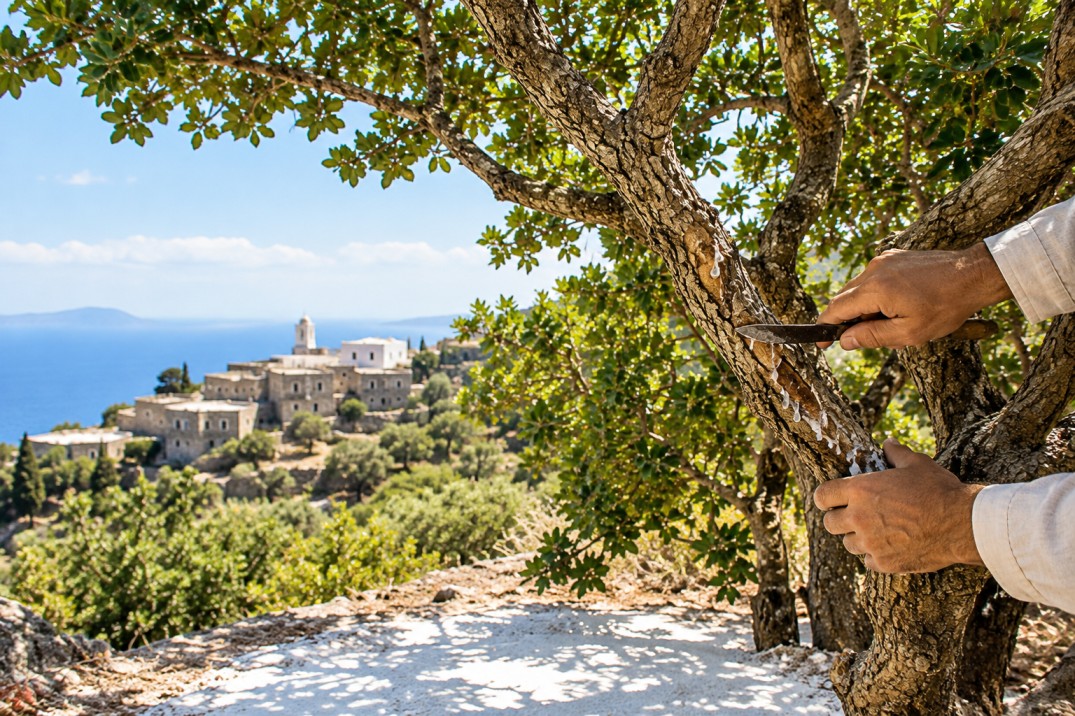
The story behind these villages is closely connected to the cultivation of mastic, the aromatic natural resin produced by the Pistacia lentiscus variety that grows in southern Chios. Harvesting takes place mainly during the summer months and involves a traditional technique known as kentima. Local producers carefully make small cuts in the tree’s trunk and branches, allowing the resin to emerge and gradually harden into the characteristic tear-shaped crystals. The process of harvesting and cleaning remains largely manual, with knowledge passed down through generations. In 2014, the traditional cultivation of Chios mastic was recognised by UNESCO as part of the Intangible Cultural Heritage of Humanity.
To discover more about this remarkable tradition, visitors can explore the Chios Mastic Museum, located near Pyrgi. Surrounded by mastic trees, the museum presents the history of cultivation, traditional production techniques and the many uses of this unique product.
Mastic also holds an important place in local gastronomy. From traditional sweets and ice cream to aromatic liqueurs, pastries and contemporary culinary creations, its distinctive flavour can be enjoyed in many different ways. Visitors can also discover local shops offering mastic-based products, making for a memorable souvenir from the island.
Exploring the Mastichochoria is more than a cultural excursion. It is an opportunity to meet the traditions, flavours and people that make Chios so special. Here, every village and every mastic tree tells a story of heritage, craftsmanship and a way of life that continues to thrive.

