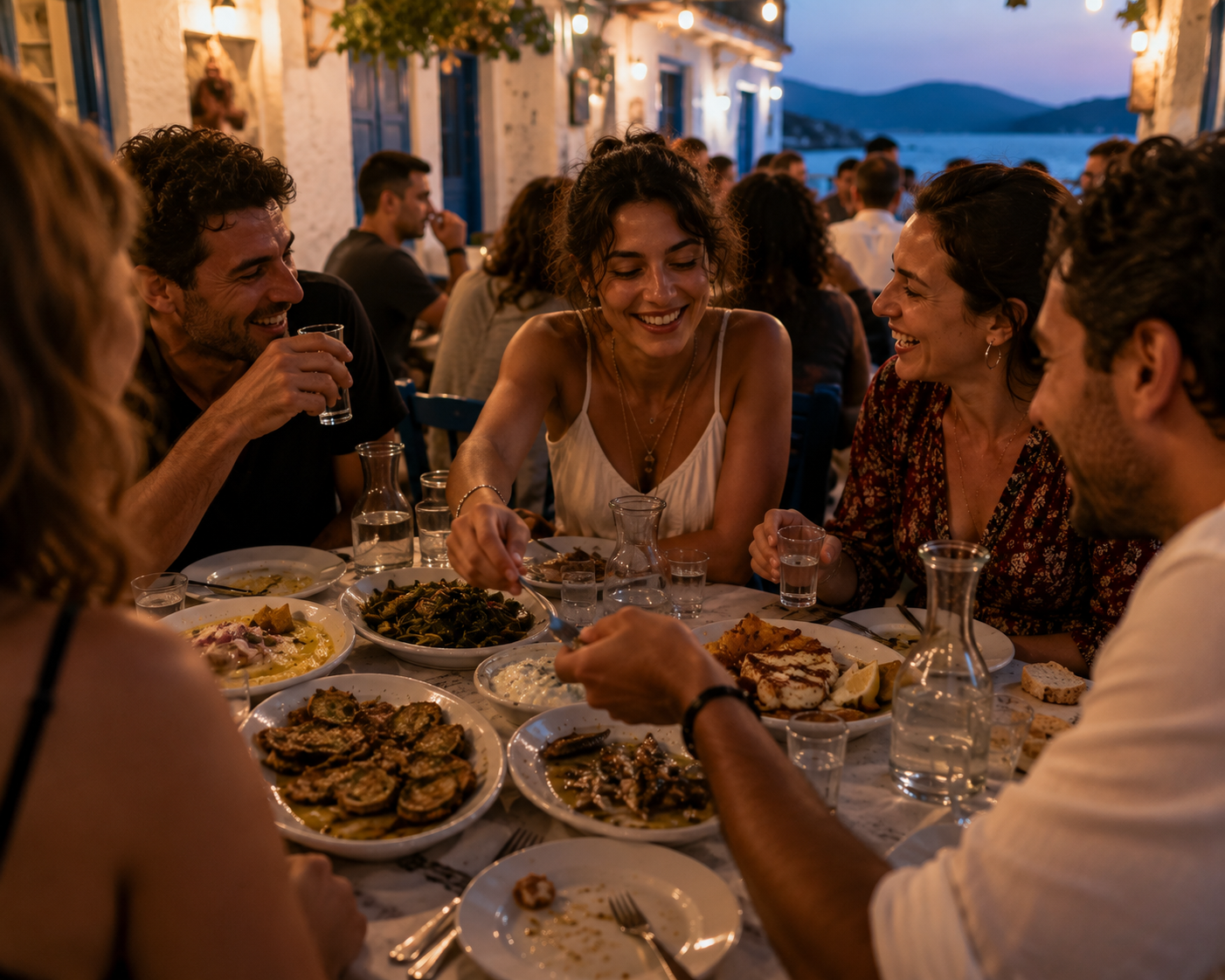
In Greece, coffee is much more than a drink. It is a ritual, a way of life, and the invisible thread that has held local communities together for generations. If you want to experience the country beyond the usual tourist attractions, there is one place you simply cannot miss: the traditional kafeneio.
The Heart of Every Village
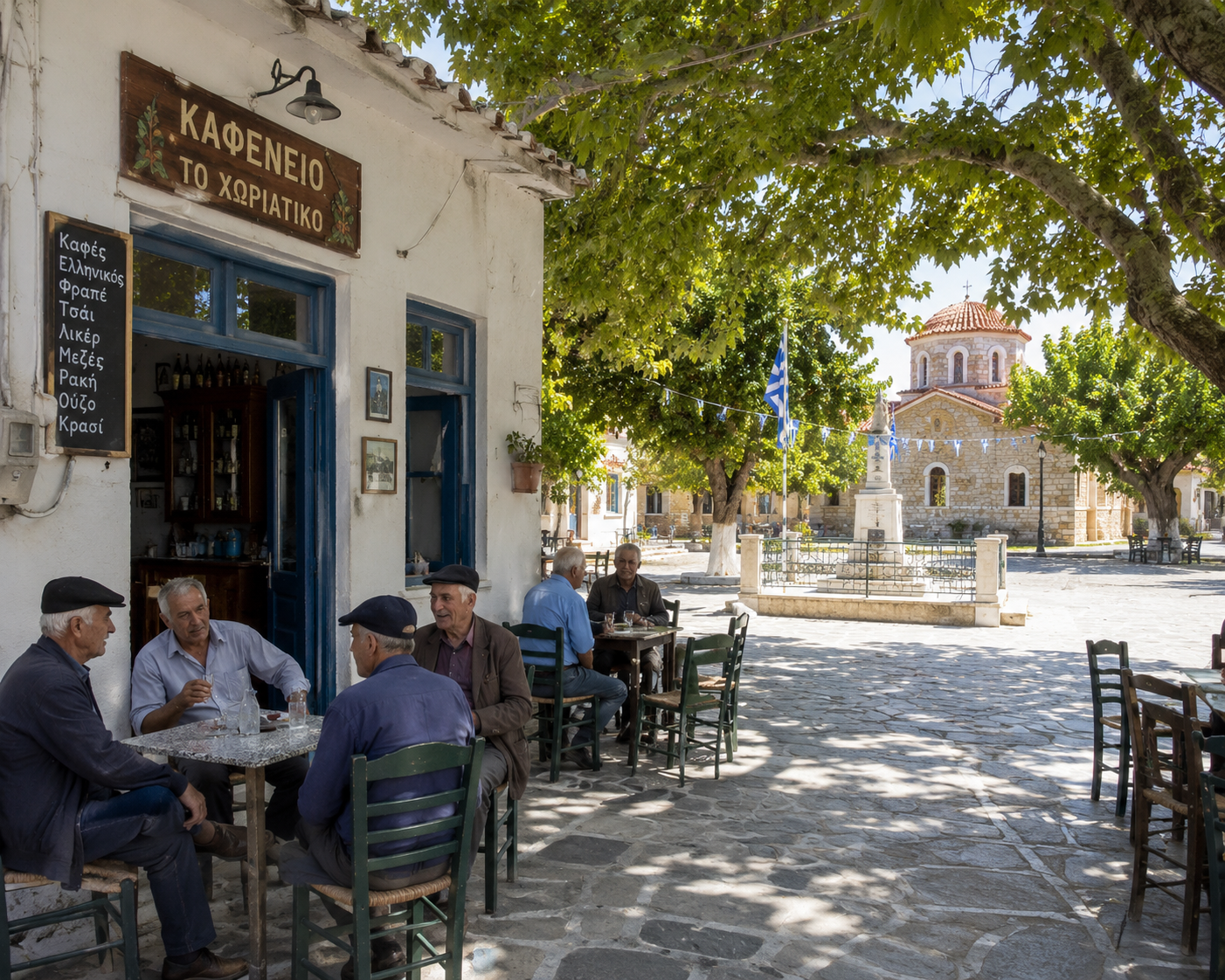
For decades, the kafeneio has been the social hub of villages, neighbourhoods, and town squares across Greece. It is where everyday life meets tradition, and where time seems to slow down. People of all ages—once predominantly men, but increasingly women as well—gather around small tables to catch up on local news, debate everything from politics to football, or enjoy a lively game of tavli (backgammon) amid laughter and conversation.
For travellers, there is no better place to understand the rhythm of Greek life. A single visit to a local kafeneio reveals more about a destination than any guidebook ever could.
The Ritual of Greek Coffee
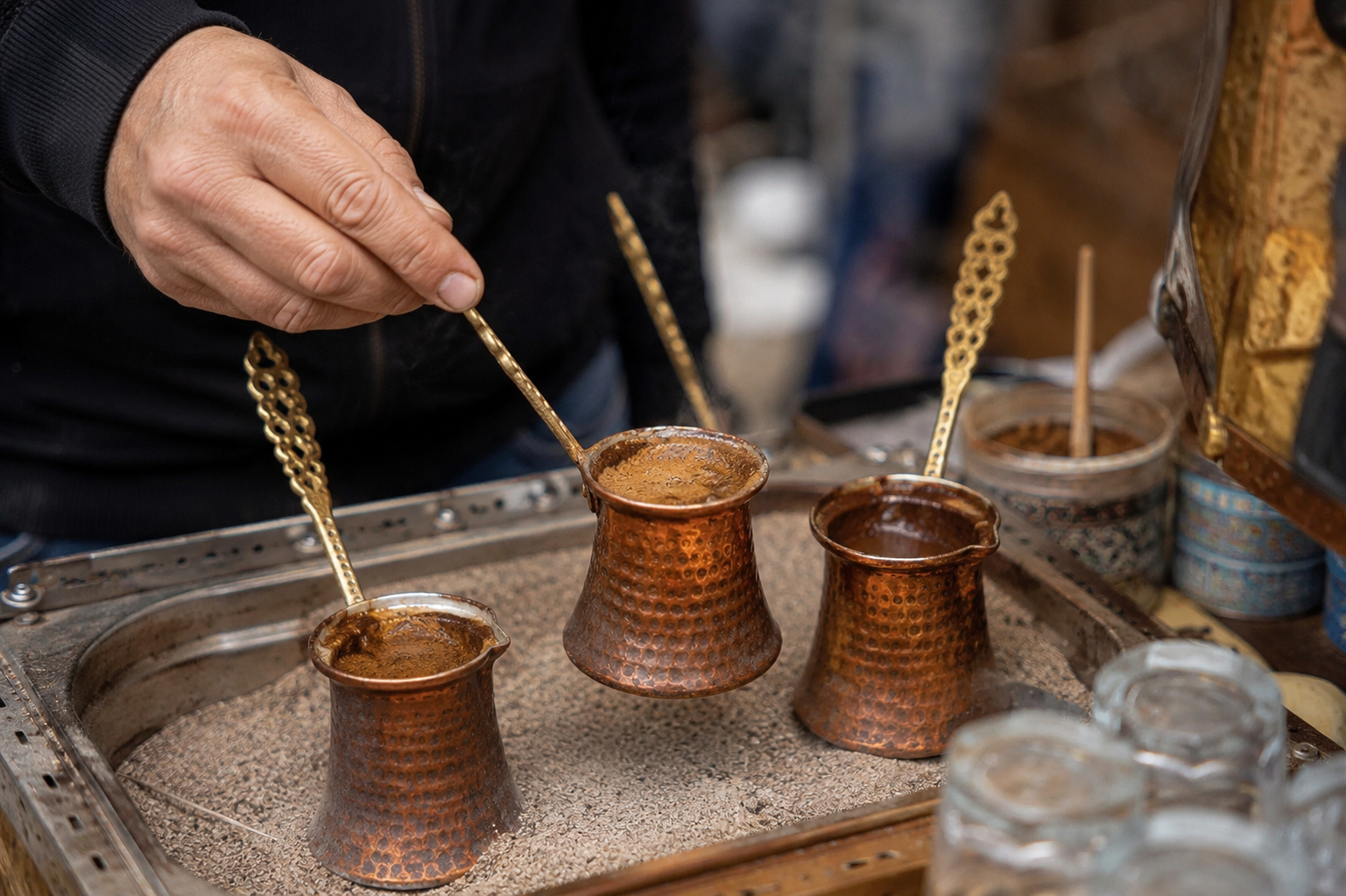
Ordering a traditional Greek coffee is an experience in itself. In many authentic coffeehouses, it is still prepared over hovoli—hot sand that gently heats the small coffee pot, creating a richer flavour and the thick, velvety foam that every skilled coffee maker takes pride in.
When your coffee arrives, don’t rush. Let it rest for a few moments so the fine coffee grounds can settle at the bottom of the cup. It is always served with a glass of cold water, and often accompanied by a piece of loukoumi (Turkish delight) or a spoon sweet—small gestures of hospitality that reflect the warmth of Greek culture.
One final tip: you’ll almost certainly be asked how you’d like your coffee. The traditional options are sketos (without sugar), metrios (medium sweet), or glykos (sweet). Knowing your preference before you order is a simple way to blend in like a local.
Tips for Visitors
- Take a moment to observe. Leave the pace of modern life behind and notice how locals greet one another, linger over conversation, and enjoy each other’s company without rushing.
- Sip your coffee slowly. Greek coffee is not designed for takeaway cups or busy mornings. It is an invitation to sit down, relax, and savour the moment.
- Talk to the owner. Whether you’re on a Greek island or in a mountain village, the kafetzis (coffeehouse owner) often knows the area better than any travel guide—from hidden beaches and scenic hiking trails to the best local tavernas and artisan shops.
- Don’t hurry to leave. Time is measured differently in a kafeneio. If someone invites you into a conversation or offers to share a story, accept the invitation. It may become one of the highlights of your trip.
A Living Piece of Greek Heritage
The traditional kafeneio is far more than a place to drink coffee. It is a living part of Greece’s history, culture, and everyday life—a timeless institution that continues to bring people together.
The next time you find yourself in a Greek village square, seek out its oldest coffeehouse. Take a seat on a wooden chair beneath the shade of a plane tree, order a Greek coffee, and let the country’s genuine hospitality unfold around you.