

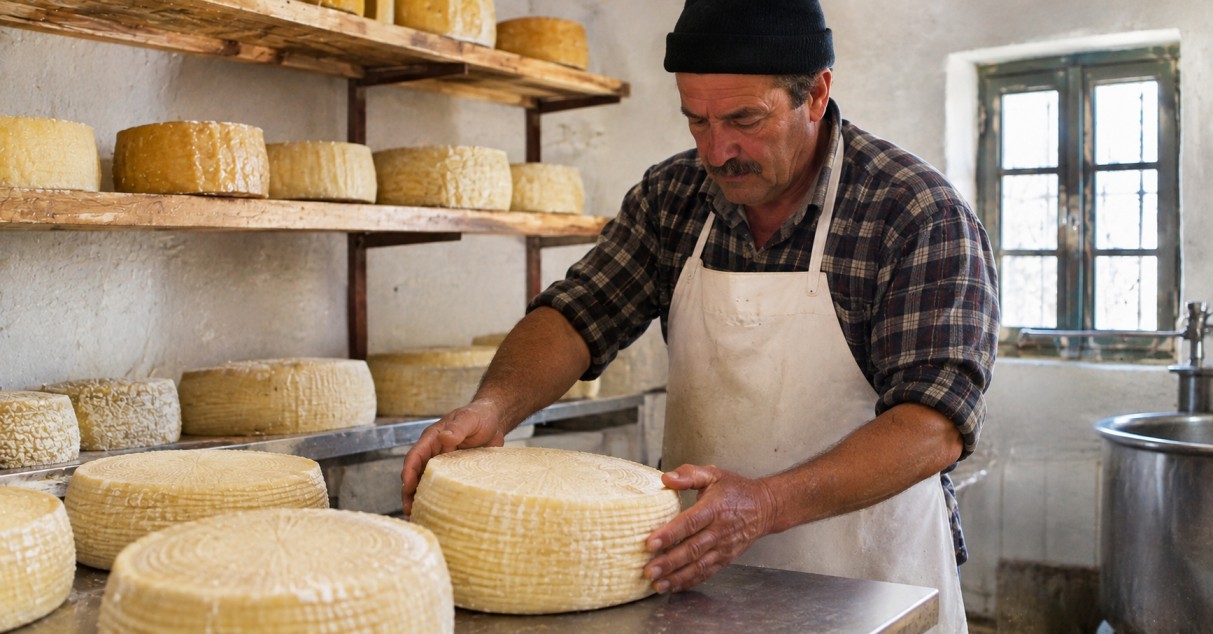

Beyond its sandy beaches, whitewashed villages and ancient landmarks, Naxos has another treasure deeply rooted in its identity: its rich tradition of cheese-making. For generations, livestock farming and dairy production have shaped the island’s agricultural landscape, giving rise to some of Greece’s most distinctive cheeses, including the renowned Graviera Naxou.
The island’s relationship with cheese-making dates back centuries. Historical records indicate that milk-producing cows were already being raised on Naxos as early as the 16th century, establishing a long-standing tradition of dairy farming. Over time, local communities developed their own cheese-making techniques, passing their knowledge from one generation to the next. Today, this heritage remains an important part of everyday life and the island’s local economy.
The Story Behind Graviera Naxou
Perhaps the most celebrated expression of this tradition is Graviera Naxou, a hard cheese recognised with Protected Designation of Origin (PDO) status in 1996. Its production is closely connected to the island’s farming community and the quality of locally sourced milk.
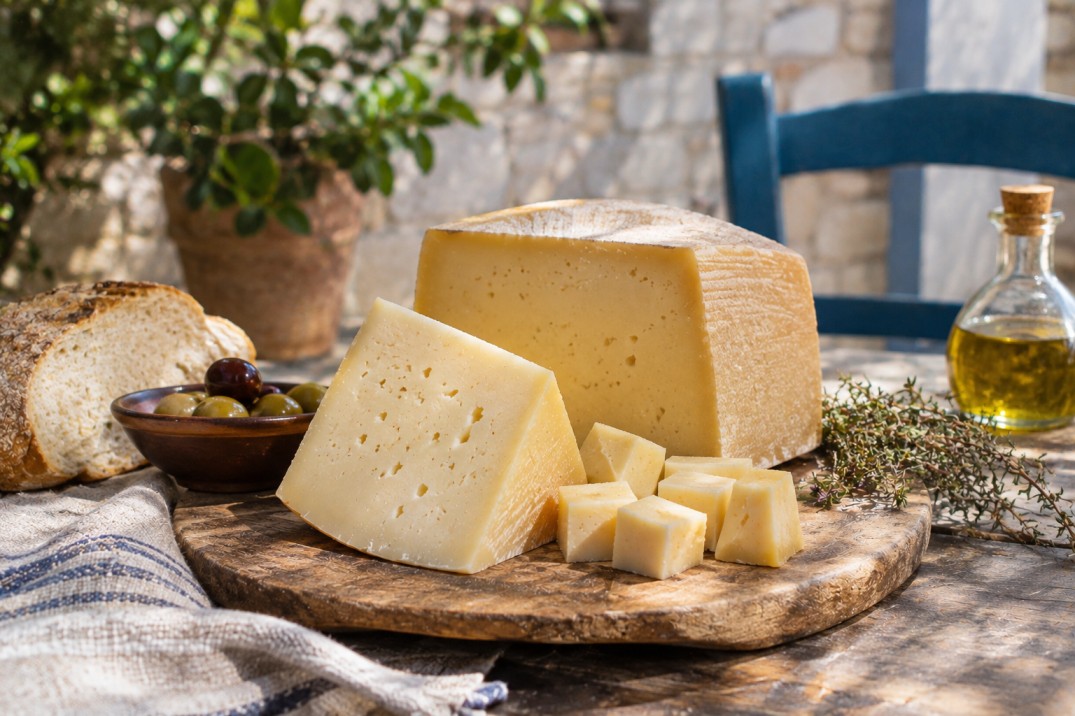
Made with at least 80% cow’s milk, alongside sheep’s and goat’s milk in a proportion of up to 20%, Graviera Naxou is distinguished by its golden-yellow colour, delicate aroma and pleasantly sweet, buttery flavour. Its production involves several carefully controlled stages, from milk collection and processing to pressing, salting and maturation. The cheese is then left to mature on shelves under controlled conditions, allowing it to develop its characteristic texture and taste.
The Union of Agricultural Cooperatives of Naxos (EAS Naxou), established in 1926, played a significant role in developing the island’s dairy industry. In 1955, as cattle farming expanded and milk production increased, local farmers began organising the collection of their milk to produce their own cheese, with the cooperative providing the necessary expertise.
More Than Just Graviera
Although Graviera Naxou is its best-known variety, the island offers a much wider selection of traditional cheeses. Arseniko, a firm and flavourful cheese made from sheep’s milk, is another local favourite, while mizithra and xinomizithra offer softer alternatives with fresh and slightly tangy flavours.
For visitors, discovering Naxos through its cheeses is an opportunity to experience a different side of the island, one shaped by rural traditions, local craftsmanship and generations of agricultural knowledge. Whether enjoyed in a traditional taverna, accompanied by local products or purchased directly from a local producer, these cheeses tell a story that goes far beyond the dining table.
On Naxos, cheese-making is not simply a culinary tradition; it is an essential part of the island’s cultural heritage, connecting its past with the people who continue to preserve it today.

