

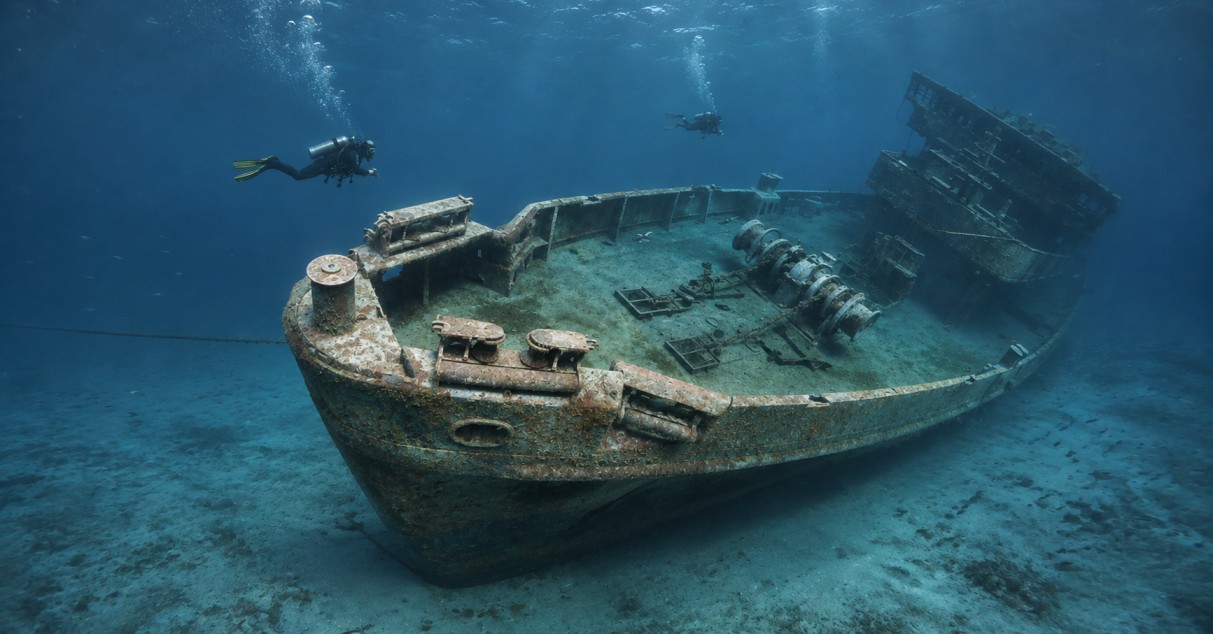

Beneath Greece’s turquoise waters lies an extraordinary archaeological landscape, where ancient shipwrecks, submerged settlements and centuries-old artefacts offer a glimpse into the country’s maritime past. For thousands of years, the Aegean and Ionian seas connected communities, merchants and civilisations. Today, the remains of these journeys provide some of the most fascinating opportunities to explore Greece’s history from a different perspective.
From accessible underwater archaeological sites to ancient cities preserved beneath the sea, these destinations reveal a side of Greek heritage that often remains hidden from visitors.
1. Peristera Underwater Museum, Alonissos
Located off the coast of Alonissos in the Northern Sporades, the Peristera Underwater Museum is one of Greece’s most remarkable underwater archaeological attractions. The site centres on an ancient merchant ship that sank during the late 5th century BC while transporting thousands of wine amphorae.
Discovered in 1985, the wreck contains an impressive collection of ancient vessels scattered across the seabed, providing valuable evidence of maritime trade during classical antiquity.
Certified divers can explore the archaeological site through authorised diving centres, accompanied by specialist guides. Visitors without diving experience can discover its history at the Knowledge and Awareness Centre in Alonissos, which offers virtual underwater experiences and interactive presentations.
2. Pavlopetri, Laconia
Just off the southern coast of the Peloponnese, near Elafonisos, lies Pavlopetri, one of the oldest known submerged prehistoric settlements in the world. Dating back more than 5,000 years, this remarkable archaeological site preserves the remains of an organised Bronze Age community.
Its underwater landscape includes streets, buildings, courtyards and tombs, offering a rare insight into how people lived and organised their settlements in the ancient Mediterranean.
Unlike a conventional underwater museum, Pavlopetri is an archaeological site that can be appreciated for its historical and scientific importance. Its remains provide an extraordinary connection to a civilisation that existed long before classical Greece.
3. The Underwater Archaeological Sites of the Western Pagasetic Gulf
The waters of the Western Pagasetic Gulf in Magnesia contain several important archaeological sites, including the ancient shipwrecks of Kikynthos, Telegrafos and Glaros.
These sites form part of Greece’s initiative to make selected underwater archaeological heritage accessible to the public. Their submerged remains reveal centuries of maritime activity and the importance of sea routes connecting settlements around the Pagasetic Gulf.
The project has also explored the use of digital applications and virtual experiences to help visitors understand the archaeological discoveries without necessarily entering the water. Current diving access should be checked with the relevant archaeological authorities before planning a visit.
4. Methoni and Plytra: The Sunken Settlements of Southern Peloponnese
The southern Peloponnese is home to several fascinating submerged settlements, including archaeological remains near Methoni and Plytra.
Over the centuries, coastal changes, geological activity and other natural processes contributed to parts of these historic settlements disappearing beneath the sea. Their remains offer valuable evidence of how communities developed along the Peloponnesian coastline and adapted to their maritime surroundings.
Visitors can discover more about these underwater discoveries at the exhibition Sunken Settlements of the Southern Peloponnese, housed within the historic Niokastro Fortress in Pylos. The exhibition brings together archaeological material and information about submerged settlements, making underwater heritage accessible even to those who do not dive.
Exploring Greece Beneath the Surface
Greece’s underwater archaeological heritage offers much more than the remains of ancient ships. It reveals entire communities, commercial networks and stories of everyday life that have survived beneath the Mediterranean for thousands of years.
Whether exploring an ancient shipwreck in Alonissos, learning about the submerged settlement of Pavlopetri or discovering archaeological collections in Pylos, visitors can experience a different dimension of Greek history. For travellers interested in archaeology and cultural exploration, these sites provide a compelling reason to look beyond Greece’s celebrated monuments and discover what lies beneath its seas.
