

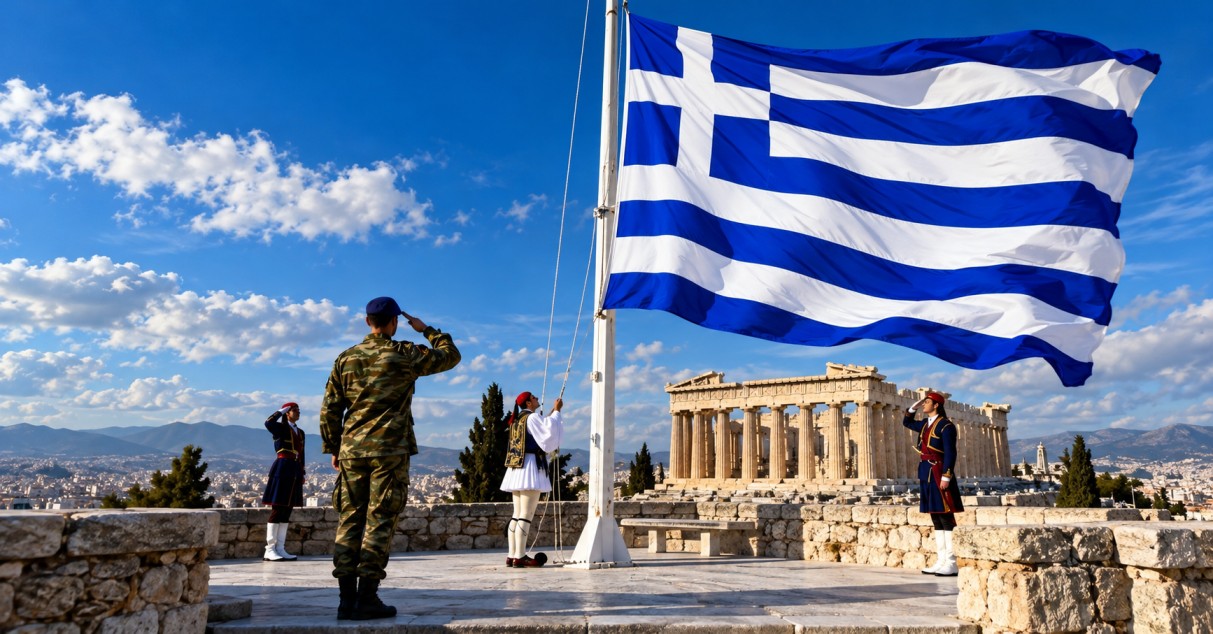

On October 28, the streets of Greece become stages for a tradition that brings generations together. From organised school parades to children carrying the national flag, Ohi Day is marked through public ceremonies that reflect the country’s enduring sense of identity. For international visitors, it offers an opportunity to witness how Greece commemorates a defining moment in its modern history.
A Day of Parades Across Greece
Parades are among the most recognisable features of Ohi Day. In cities, towns and villages, schoolchildren march through the streets in organised processions, often wearing their school uniforms or traditional Greek costumes. Students carry the Greek flag, while families and local residents gather along the routes to watch and applaud.
Athens and Thessaloniki host some of the country’s most prominent commemorations, including military parades and official ceremonies. However, the celebrations are not limited to major urban centres. Smaller communities throughout mainland Greece and the islands organise their own events, giving the day a strong local character.
Blue and White Everywhere
In the days surrounding October 28, the Greek flag becomes a familiar sight across the country. Flags hang from balconies, decorate public buildings and line streets, creating a distinctive atmosphere in neighbourhoods and town centres.
The colours blue and white are closely associated with Greece’s national identity, and their widespread display reflects the importance of the anniversary. For many families, attending a parade or displaying a flag is a tradition passed down through generations.
Why Ohi Day Is Celebrated
Ohi Day commemorates Greece’s rejection of an ultimatum delivered by Fascist Italy on October 28, 1940. The refusal led to Italy’s invasion of Greece and marked the beginning of the Greco-Italian War.
The word Ohi, meaning “No” in Greek, has since become a symbol of resistance and the determination to defend national independence. The annual celebrations honour those who fought during the Second World War and preserve the memory of this defining period in Greek history.
Experiencing Ohi Day as a Visitor
Watching an Ohi Day parade can be a memorable addition to an October visit to Greece. From large public ceremonies in Athens and Thessaloniki to smaller local processions, visitors can observe how the anniversary is commemorated in different parts of the country.
As October 28 is a national public holiday, some businesses and services may operate on reduced hours. Checking local announcements and opening times in advance is advisable.
What to Know If You’re Visiting Greece on October 28
October 28 is a national public holiday in Greece. If you’re planning to travel around the country or explore a Greek city on this day, there are a few practical things worth keeping in mind.
- Traffic and road closures: Streets along parade routes may be temporarily closed, and parking restrictions may be in place, particularly in city centres.
- Shop opening hours: Many retail shops remain closed for the holiday, while some restaurants, cafés and tourist businesses may continue operating as usual.
- Public services and transport: Government offices and most schools are closed. Public transport may also run on a holiday schedule, so it’s worth checking local timetables in advance.
If you’d like to watch a parade, check local announcements beforehand for the exact time, route and any traffic restrictions. Planning ahead will help you make the most of your visit.


