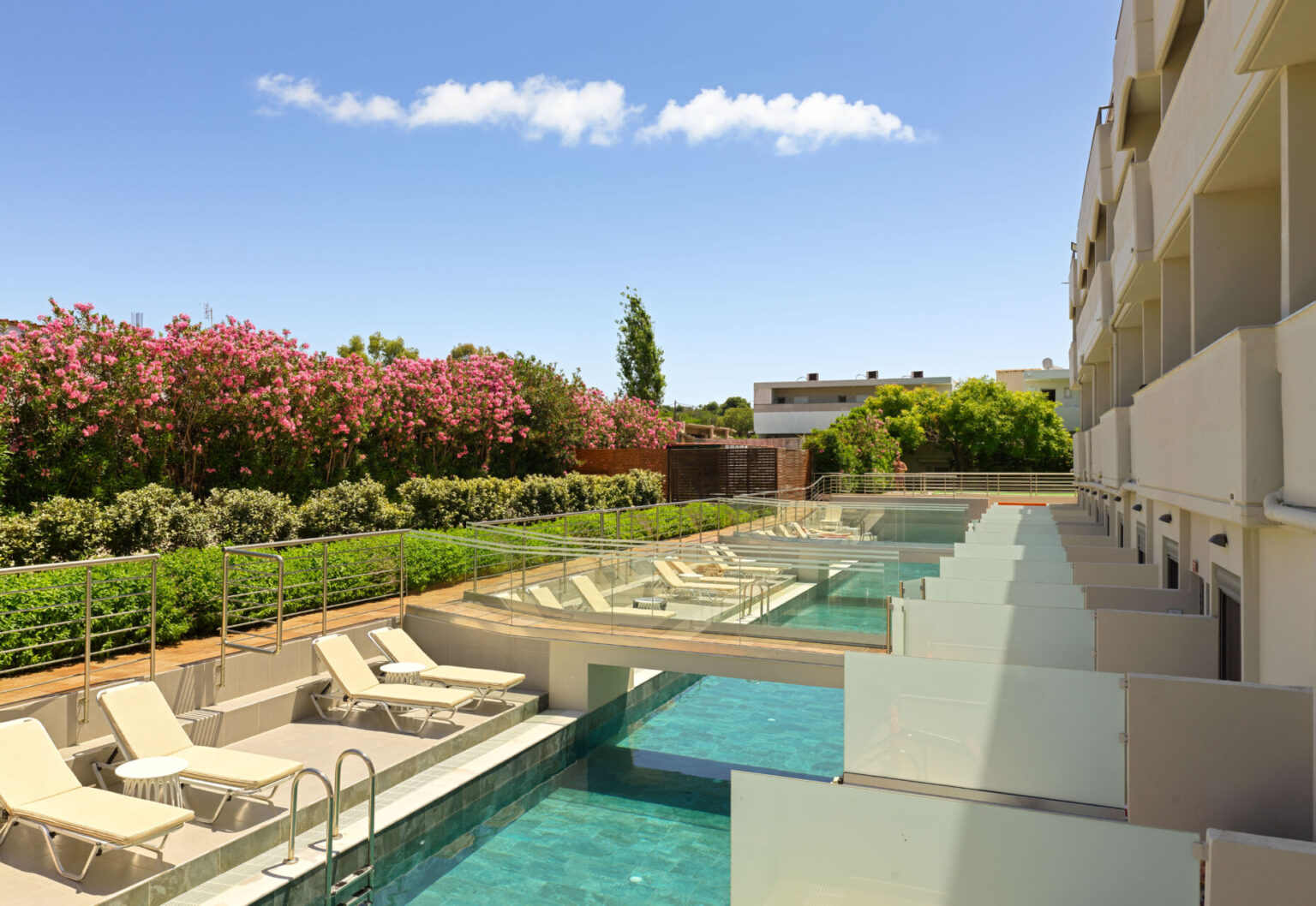
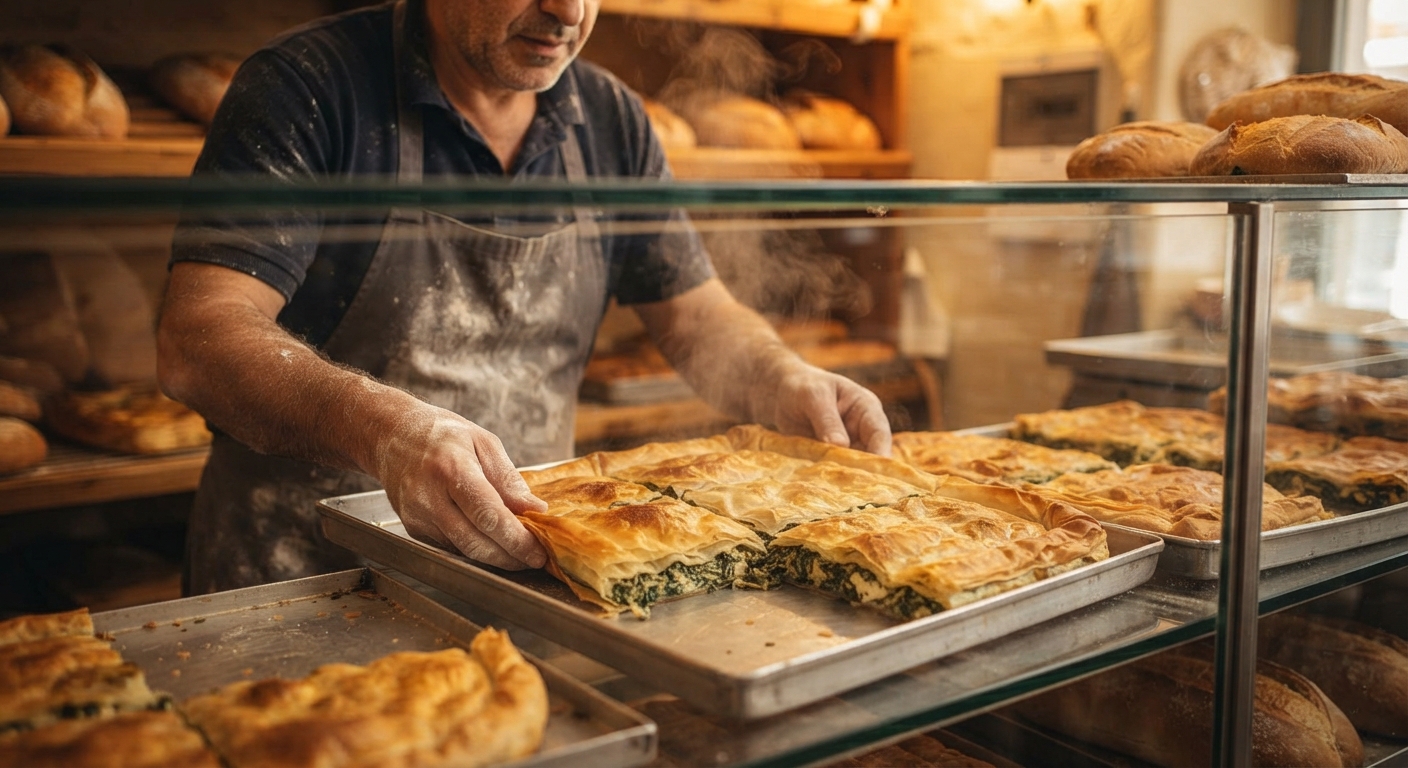
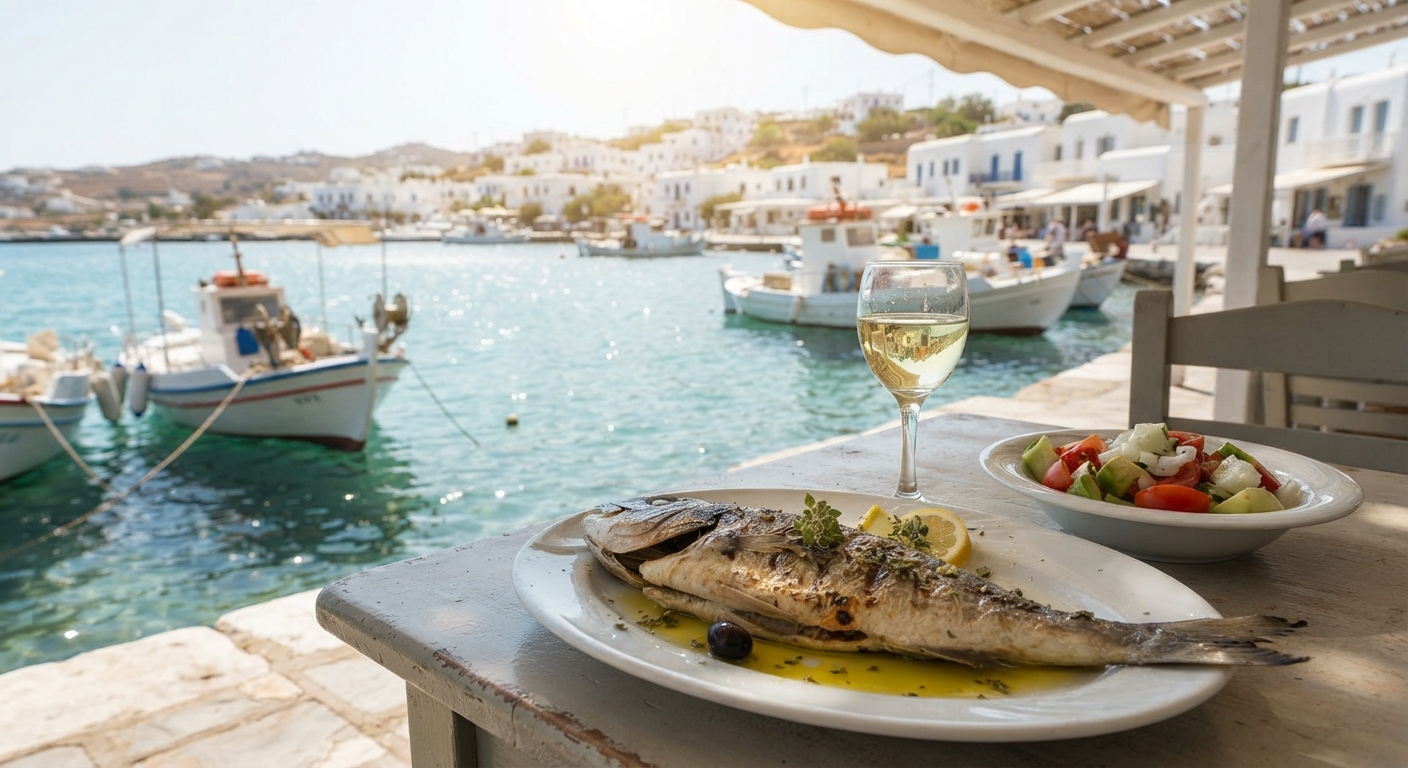
A €2,20 freddo espresso at a neighborhood café, grilled fish beside a glittering harbor, a bakery spinach pie warm from the oven – Greece can make eating well feel wonderfully accessible.
But is Greece expensive for food? For most American travelers, the answer is no, especially compared with major U.S. cities and many popular European destinations. The real answer changes sharply by island, season, and how close your table is to the caldera, marina, or beach club.
 Greece remains a place where a memorable lunch can be simple: tomatoes that taste like summer, local cheese, olive oil, a carafe of house wine, and a view that needs no reservation. Yet the country is not a single-price destination. Santorini and Mykonos operate on a different dining budget from a village in Naxos, the Peloponnese, or northern Greece. Planning around that contrast is the key to enjoying Greek food without turning every meal into a splurge.
Is Greece expensive for food compared with the U.S.?
Generally, food in Greece is less expensive than in the United States, particularly for casual restaurants, coffee, bakery stops, and local produce. A filling, unfussy lunch at a taverna often costs less than a comparable meal in New York, Los Angeles, Miami, or Boston. Service is included in menu prices, though a modest tip for good service is welcome.
A realistic daily food budget depends on the kind of trip you want. Travelers who mix bakeries, markets, casual tavernas, and one sit-down dinner can often spend about €35 to €60 per person a day. Those staying in destination dining hubs, ordering fresh seafood nightly, or choosing stylish beach restaurants may spend €80 to €150 or more per person each day.
The distinction matters because Greece rewards both approaches. A €5 souvlaki pita can be as satisfying as a polished seafood dinner, and neither should be treated as the only authentic way to eat.
What meals and drinks typically cost in Greece
Prices vary, but the following ranges are useful for trip planning. In Athens, Thessaloniki, Crete, Rhodes, Corfu, and many Cycladic islands beyond the most famous names, they are a reasonable starting point. Expect higher figures in Santorini, Mykonos, Paros hot spots, and resort waterfronts during peak summer.
Breakfast, coffee, and bakery stops
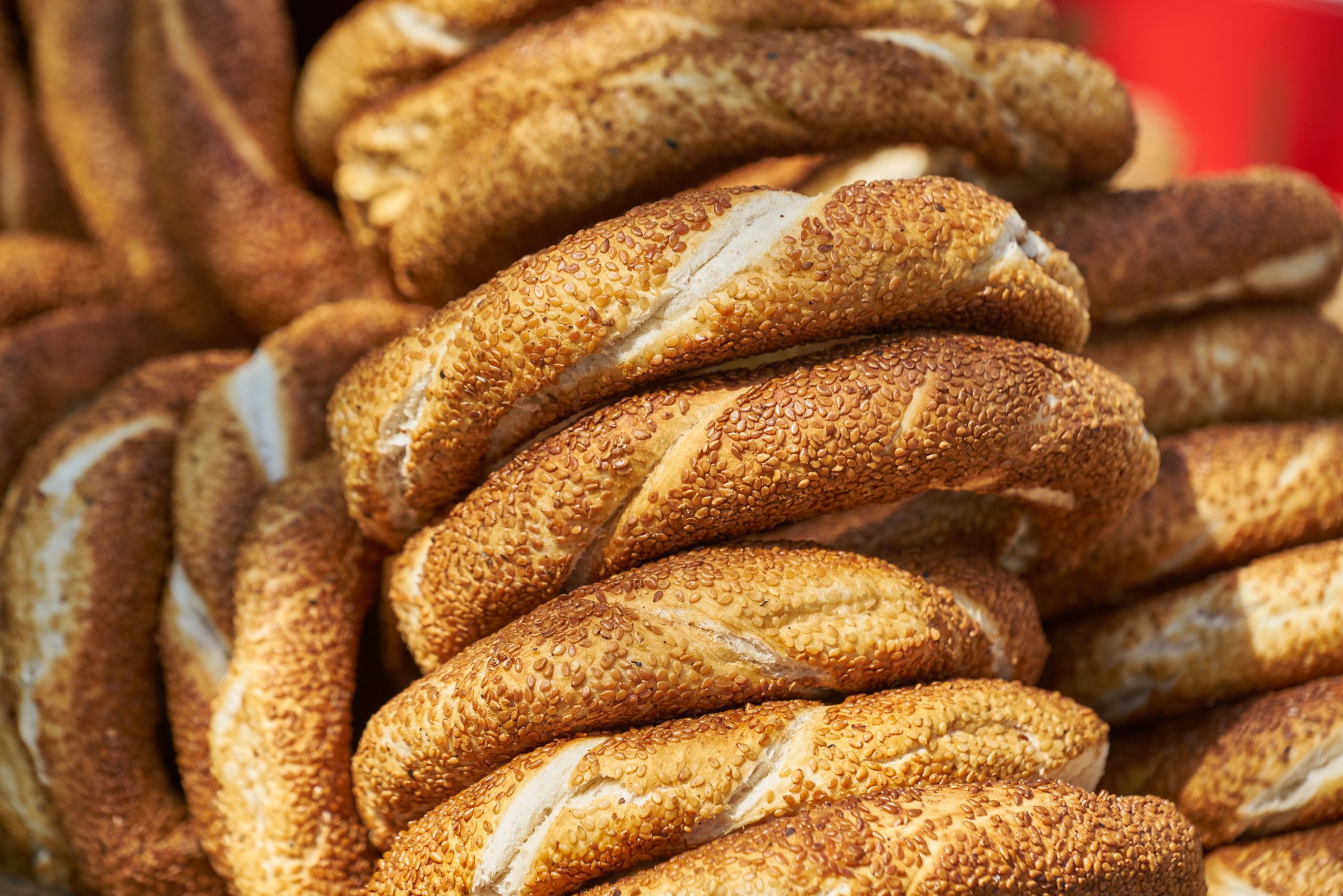
Greece has an excellent grab-and-go breakfast culture. A koulouri, the sesame bread ring sold from bakeries and street vendors, may cost €0.80 to €1.50. Cheese pies, spinach pies, and other savory pastries commonly fall between €2.50 and €5. A yogurt bowl or more elaborate hotel-area breakfast will cost more, usually €7 to €14.
 Coffee is one of the small daily pleasures of a Greek trip. An espresso or freddo espresso at a local café might be €2 to €2,5 while a scenic waterfront setting can push it to €5 or €6. Fresh orange juice is often €3 to €5. Sitting down is part of the ritual, not an added inconvenience, so budget for lingering over coffee rather than treating it as a rushed expense.
Lunch and casual street food
A souvlaki pita with meat, tomato, onion, fries, and tzatziki generally costs €3.50 to €5.50, though high-demand island locations can charge more. A portion of gyros or a simple sandwich may sit in the same range. A casual Greek salad is often €7 to €11, and larger salads with tuna, chicken, or local cheese can reach €12 to €16.
For an easy taverna lunch, share a few small plates. Expect around €5 to €9 for tzatziki, fava, or fried zucchini, €8 to €14 for a salad, and €10 to €18 for mains such as moussaka, pastitsio, grilled pork, or chicken. Two people can eat very comfortably for €30 to €50 with water or a modest drink, especially away from the most photogenic waterfront tables.
Dinner, seafood, and wine
Dinner is where Greece can be either remarkably good value or unexpectedly pricey. A traditional main course at a local taverna often costs €12 to €20. Fresh fish is usually priced by weight, not by plate, and the final bill can climb quickly. Ask to see the fish and confirm the price per kilo before ordering. Depending on the catch and setting, a shared whole fish can cost €40 to €90 or substantially more.
House wine is one of the best-value orders on many menus. A half-liter carafe may cost €5 to €10, while a bottle of Greek wine in a restaurant often begins around €20 to €30. Cocktails at relaxed bars are frequently €10 to €15. On Mykonos or Santorini, especially at sunset-facing venues and beach clubs, €18 to €25 cocktails are common.
Dessert is sometimes offered by the house: sliced fruit, spoon sweets, loukoumades, or a small liqueur after the meal. It is a lovely Greek gesture, but not a promise. Consider it a bonus rather than part of your budget.
The islands where food costs rise fastest
The most expensive meals in Greece are rarely expensive because Greek cuisine itself is costly. They are expensive because of location, short summer seasons, freight logistics, and high demand for a particular view.
Santorini is the clearest example. Ingredients, staff, and supplies must be moved onto a volcanic island with intense seasonal demand. A cliffside restaurant in Oia or Imerovigli is selling a setting as much as a menu. Mykonos carries a similar premium, amplified by its international party and luxury scene. A beachside lunch with cocktails can become a full afternoon expense before the food arrives.
This does not mean travelers should skip these islands. It means choosing intentionally. Have one sunset dinner you will remember, then seek out a family-run taverna in a village, a bakery breakfast, or a casual lunch away from the headline neighborhoods. On Santorini, even a short move inland from the caldera can change the bill noticeably.
Naxos, Syros, Tinos, Milos, Amorgos, Sifnos, and many Dodecanese and Ionian islands can offer excellent dining at gentler prices, though their most fashionable restaurants also book up and charge accordingly. Crete is particularly generous for travelers who want abundant local food, from mountain tavernas to harborfront seafood, without the same across-the-board premium.
How to eat beautifully without overspending
The best savings strategy is not eating cheaply at every meal. It is matching the meal to the moment. Use bakeries for breakfast, order a proper lunch at a taverna when menus are often slightly more relaxed, and reserve dinner splurges for places with a compelling reason to choose them.
Look one or two streets back from the waterfront. In Greek towns, the table with the most dramatic harbor view is often priced for its location, while the small square behind it may serve better-value dishes to a more local crowd. Menus posted outside are standard, so checking prices before sitting down is easy and sensible.
For grocery shopping, local markets and neighborhood supermarkets make picnics feel like part of the trip rather than a compromise. Bread, fruit, tomatoes, olives, yogurt, cheese, and bottled water can cover a beach lunch for a fraction of a restaurant bill. On islands, compare a larger supermarket with a mini-market near the hotel, where convenience often carries a markup.
Be especially careful with unpriced seafood, premium imported spirits, and beach club minimum spends. None are necessarily bad choices, but they are the categories most likely to surprise travelers. If a menu lacks prices or the server is vague about fish by weight, ask directly before committing.
A smarter Greek food budget for your itinerary
A week split between Athens and a less-hyped island can be far more affordable than a week based entirely in Santorini or Mykonos. Even within the same destination, travel dates matter. July and August bring the highest demand, while May, June, September, and early October often offer a more comfortable balance of weather, availability, and restaurant prices.
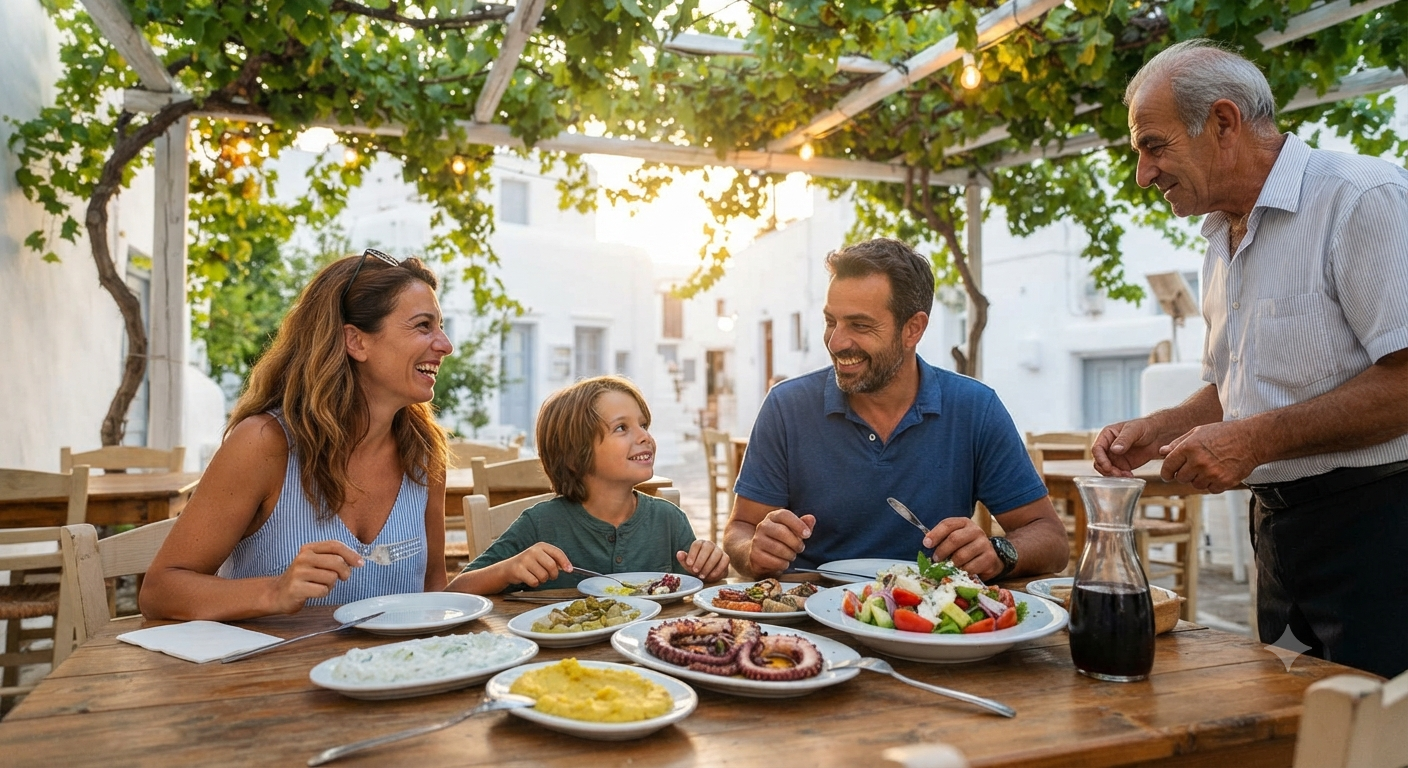 Families should remember that Greek dining is naturally shareable. Meze, salads, grilled meats, and potatoes can stretch across the table, and children are generally welcomed warmly at casual tavernas. Couples can do the same: order two or three plates first, then add more if needed. Portions are often generous, and over-ordering is an easy way to spend more than planned.
The most satisfying Greece food budget leaves room for contrast. Save with a flaky tiropita and an iced coffee in the morning. Eat a long, simple lunch under vines in a village square. Then choose one meal where the sea, the sunset, or a local specialty makes the higher price feel entirely worthwhile. That is not just a way to control costs – it is a more delicious way to travel through Greece.