

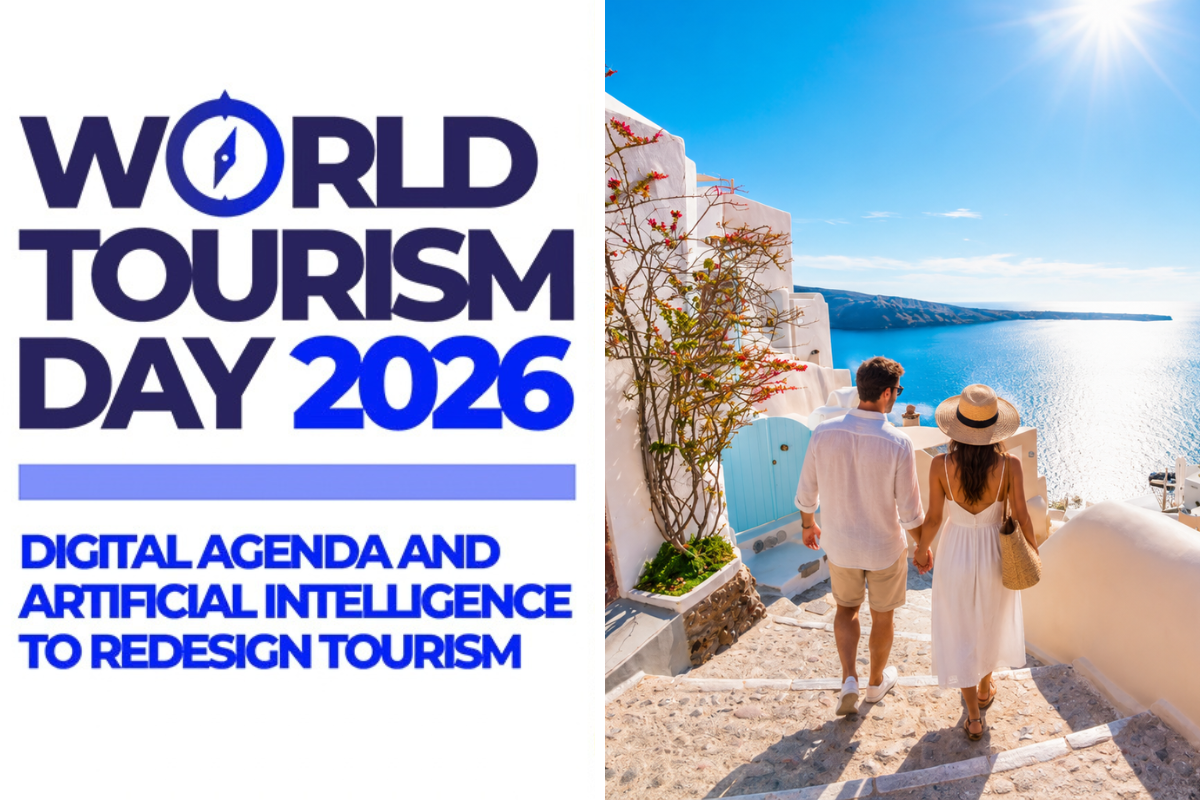

Every year on September 27, World Tourism Day celebrates the role of travel in bringing people, cultures and communities closer together. In 2026, the global observance turns its attention to one of the biggest changes facing the tourism industry: the growing influence of digital technology and artificial intelligence.
This year’s theme, “Digital Agenda and Artificial Intelligence to Redesign Tourism,” looks at how new technologies are changing the way travellers discover destinations, plan trips and experience the world.
For a country such as Greece, where tourism is closely connected to its islands, historic sites, local communities and hospitality businesses, this transformation presents both opportunities and challenges. Digital tools can make it easier for travellers to discover lesser-known destinations, while AI can help businesses improve services, communicate with visitors and create more personalised travel experiences.
At the same time, technology is influencing what travellers see and where they go. The United Nations has highlighted concerns that, without careful planning, digital platforms and AI could direct visitors towards the same popular destinations, leaving other places outside the spotlight.
This makes the future of tourism about more than simply adopting new technology. It is also about ensuring that innovation benefits local communities, tourism workers, small businesses and emerging destinations.
Tourism remains one of the world’s major economic sectors, supporting jobs and livelihoods while providing opportunities to experience cultural and natural heritage around the globe.
On World Tourism Day 2026, the conversation is therefore not simply about how technology can change travel, but about how we can use it to create a tourism industry that remains open, inclusive and human.
For Greece, the future of travel may be increasingly digital — but its greatest attractions will continue to be the people, places, traditions and experiences that make the country unique.

