

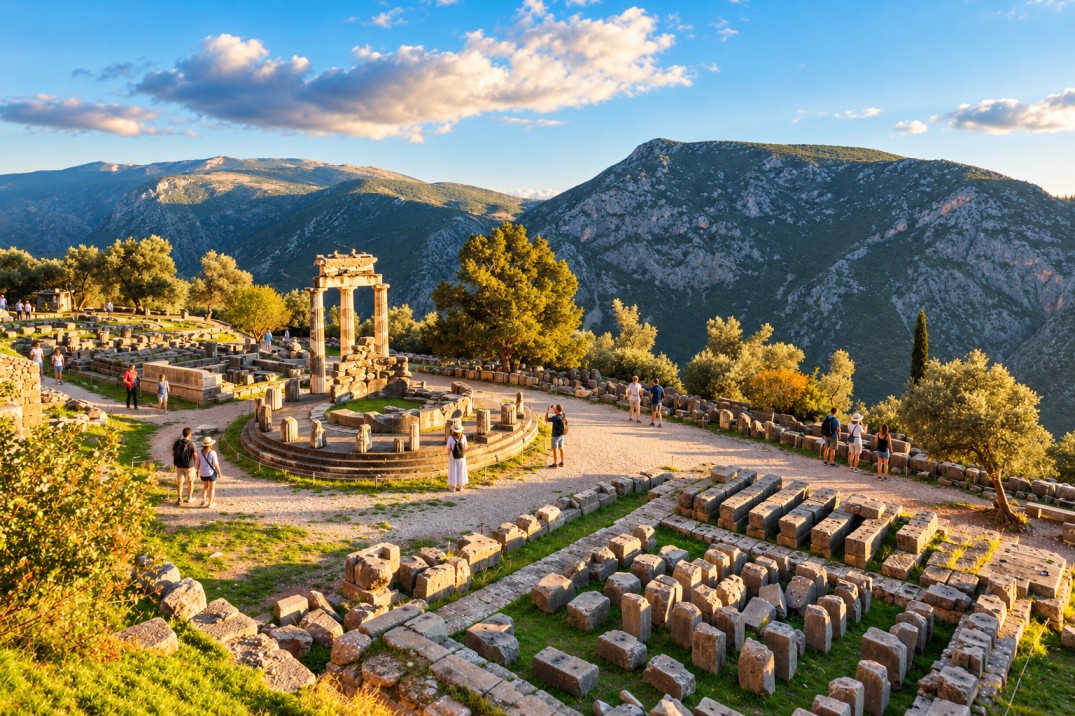

Greece’s ancient history is best experienced beyond the pages of a guidebook. From monumental temples overlooking modern cities to Minoan palaces and remarkably preserved ancient towns, the country’s archaeological sites reveal the civilisations, beliefs and achievements that shaped the Mediterranean world.
For travellers looking to add cultural depth to their Greek itinerary, these 12 archaeological sites offer a compelling journey through thousands of years of history, across the mainland and the islands.
1. The Acropolis, Athens
No cultural journey through Greece is complete without visiting the Acropolis of Athens. Dominated by the Parthenon, this ancient citadel represents the artistic and architectural achievements of fifth-century BC Athens. Explore the surrounding monuments, including the Erechtheion, before visiting the nearby Acropolis Museum for a deeper understanding of classical Greek civilisation.
2. Ancient Agora, Athens
Once the centre of political, commercial and social life in Athens, the Ancient Agora offers a glimpse into the everyday world of ancient citizens. The remarkably preserved Temple of Hephaestus and the reconstructed Stoa of Attalos make this archaeological site particularly rewarding for visitors interested in the origins of democracy and public life.
3. Delphi, Central Greece
Set on the slopes of Mount Parnassus, overlooking a spectacular valley of olive groves, Delphi was considered the centre of the ancient world. Pilgrims travelled from across Greece to consult the oracle of Apollo, leaving offerings along the Sacred Way. The Temple of Apollo, ancient theatre and archaeological museum make Delphi an essential stop on a mainland road trip.
4. Ancient Olympia, Peloponnese
The birthplace of the Olympic Games, Ancient Olympia was a major sanctuary dedicated to Zeus. Visitors can explore the remains of temples, training facilities and the original stadium where athletes competed for glory. The archaeological museum adds further context, including sculptures from the Temple of Zeus, connecting the ancient sporting tradition with its religious origins.
5. Epidaurus, Peloponnese
Surrounded by pine-covered hills, the ancient theatre of Epidaurus is renowned for its exceptional acoustics and elegant proportions. Part of a sanctuary dedicated to Asklepios, the god of healing, it once welcomed visitors seeking physical and spiritual restoration. Combine the theatre with the wider sanctuary for a fuller appreciation of this remarkable ancient healing centre.
6. Mycenae, Peloponnese
Associated with the legendary King Agamemnon, Mycenae was one of the most powerful centres of the Bronze Age Aegean. Walk through the monumental Lion Gate, explore the citadel and visit the impressive Treasury of Atreus. Its massive stone fortifications and royal tombs offer a striking introduction to the civilisation that preceded classical Greece.
7. Knossos, Crete
Near Heraklion, the Palace of Knossos introduces visitors to the Minoan civilisation, which flourished on Crete thousands of years ago. Its elaborate palace complex, colourful frescoes and sophisticated infrastructure have inspired enduring connections with the myth of the Minotaur. Some areas were reconstructed in the early twentieth century, making a guided visit particularly worthwhile.
8. Phaistos, Crete
For a quieter archaeological experience, head to Phaistos, overlooking the fertile Messara Plain. This Minoan palace is known for its monumental stairways, expansive courtyards and atmospheric ruins. With less reconstruction than Knossos, it offers a different perspective on prehistoric Crete and pairs beautifully with a journey through the island’s southern landscapes.
9. Akrotiri, Santorini
Beyond Santorini’s caldera views lies Akrotiri, a prehistoric settlement buried beneath volcanic ash during the Bronze Age. Multi-storey buildings, streets and storage vessels reveal a prosperous community with sophisticated urban planning. The covered archaeological site is also an excellent cultural stop during the warmer months.
10. Delos, Cyclades
A short boat journey from Mykonos, Delos is an uninhabited island rich in ancient history. Sacred to Apollo and Artemis, it later developed into an important commercial centre. Explore its marble theatre, mosaics, temples and residential quarters to discover a once-thriving city at the heart of the Cyclades.
11. Aigai, Vergina, Northern Greece
The ancient royal capital of Macedonia, Aigai, is closely associated with the dynasty of Alexander the Great. Its underground museum showcases royal tombs, intricate painted decorations and extraordinary gold artefacts. For travellers exploring northern Greece, Vergina offers a fascinating encounter with the kingdom that transformed the ancient world.
12. Ancient Messene, Peloponnese
Less visited than many of Greece’s famous archaeological sites, Ancient Messene rewards those willing to venture beyond the usual tourist routes. Its impressive fortifications, stadium, theatre, sanctuaries and public spaces reveal an exceptionally well-preserved ancient city. Located near Kalamata, it is a compelling addition to a Peloponnese itinerary.
Discover Another Side of Greece
From the iconic monuments of Athens to the quieter ruins of Messene, Greece’s archaeological heritage offers countless opportunities to connect with the past. Whether planning a dedicated cultural journey or adding a historical stop to an island escape, these sites reveal a side of Greece that extends far beyond its celebrated beaches.

