
There are archaeological sites you visit for the ruins. Then there are places where the history feels almost alive. Ancient Olympia belongs firmly in the second category.
Set in a lush valley in the western Peloponnese, Olympia was far more than the birthplace of the Olympic Games. For more than a thousand years, it was a sacred centre where religion, sport, politics and art came together. Today, its temples, training grounds, museums and legendary stadium offer travellers a fascinating glimpse into a world that continues to influence how we think about sport.
The ancient Olympic Games are traditionally said to have begun in 776 BC, held in honour of Zeus. Competitors and spectators travelled from across the Greek world to take part in the festival, with a sacred truce allowing people to journey safely despite political conflicts between city-states.
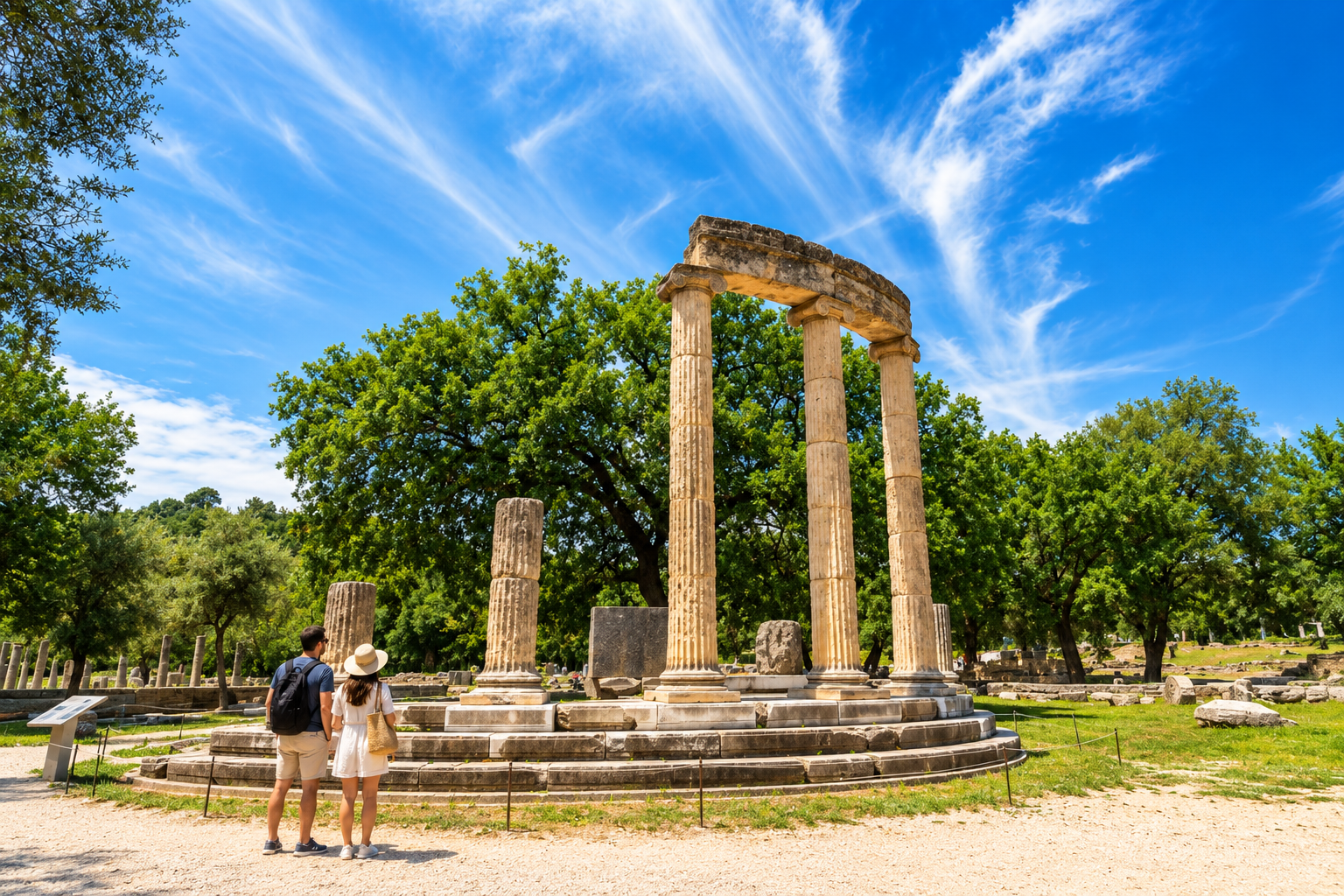
Walking through the sanctuary, the scale of Olympia gradually reveals itself. The Temple of Zeus once housed a monumental gold-and-ivory statue of Zeus by the sculptor Phidias, considered one of the Seven Wonders of the Ancient World. Nearby, the older Temple of Hera remains one of the site’s most atmospheric landmarks and is still connected to the modern Olympic tradition: the Olympic flame is ceremonially lit here before travelling to the host city.
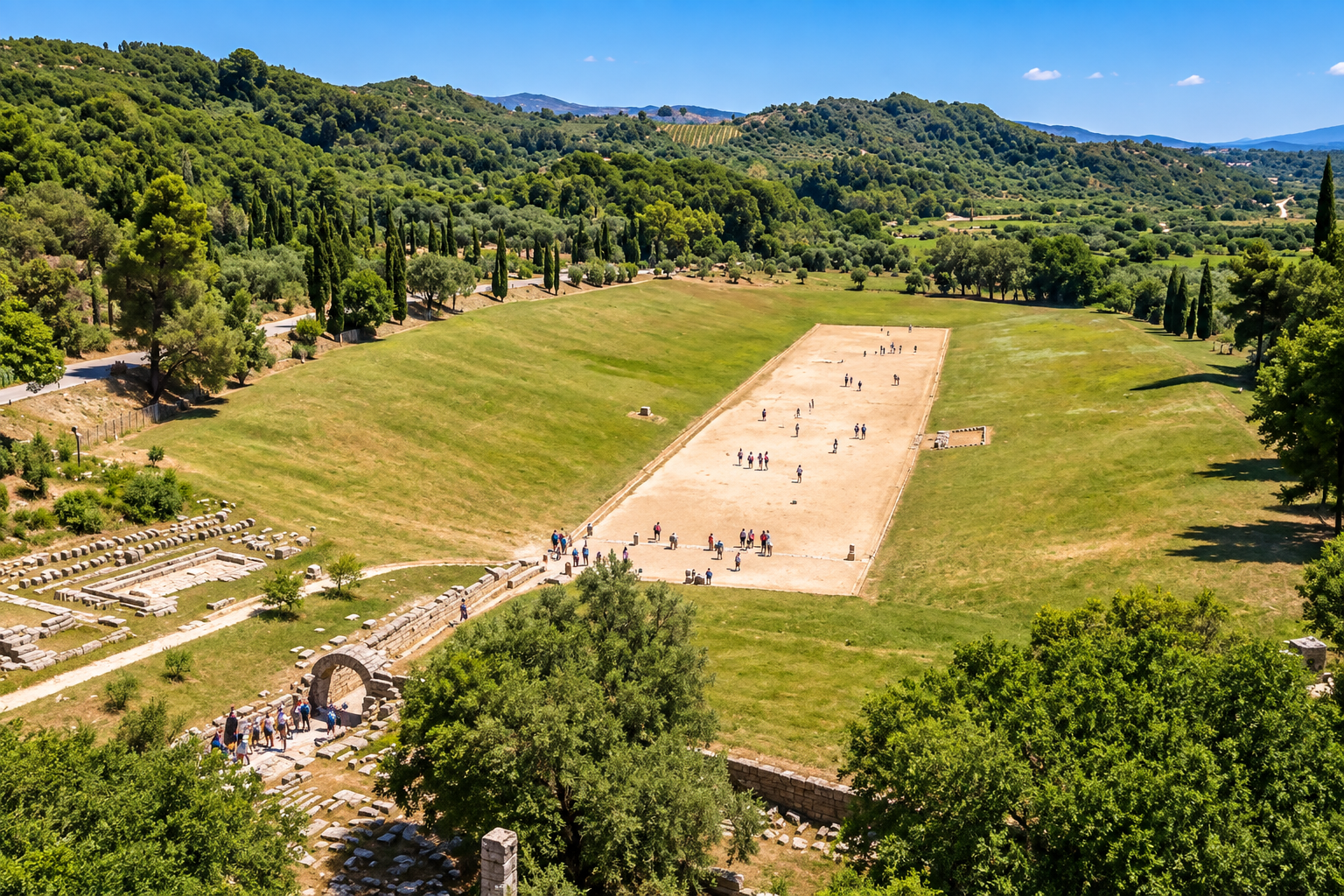
And then comes the stadium.
Unlike today’s enormous sporting arenas, Olympia’s stadium is remarkably simple. There are no grandstands, screens or elaborate structures – just a long running track surrounded by grassy slopes. Standing at the starting line, it is surprisingly easy to imagine thousands of spectators gathering here centuries ago as athletes competed not for medals, but for honour and an olive wreath.
More Than an Archaeological Site
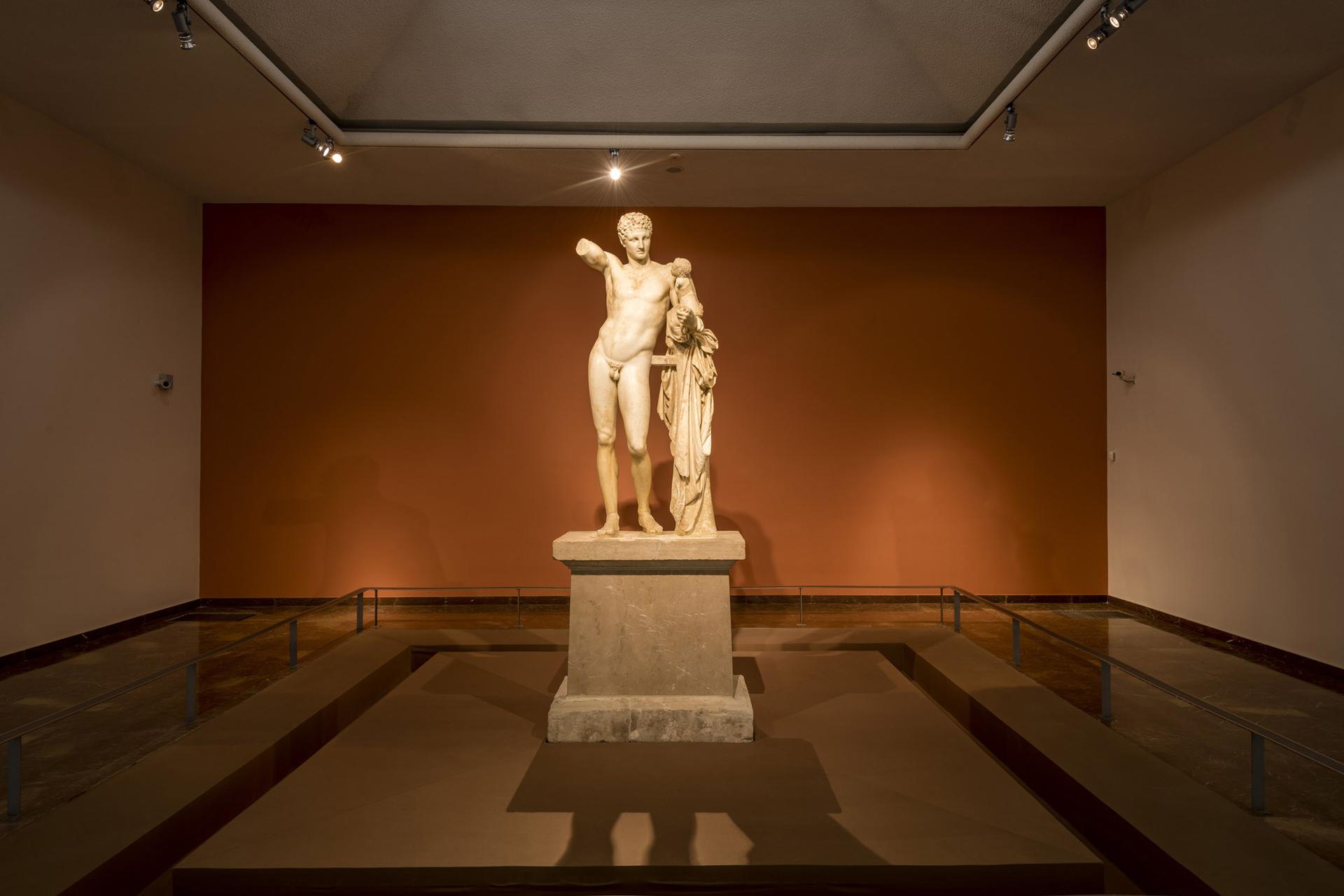
A visit to Olympia should not end at the stadium. The Archaeological Museum of Olympia brings the sanctuary’s artistic achievements to life, with extraordinary sculptures including the pediments of the Temple of Zeus and the famous Hermes of Praxiteles.
For a deeper understanding of the Games themselves, the Museum of the History of the Olympic Games in Antiquity explores the competitions, traditions and athletes behind the ancient festival.
Plan at least half a day for Olympia, although a full day allows you to explore without rushing. Early morning or late afternoon is particularly pleasant in the warmer months, when the surrounding landscape takes on a softer light and the heat is less intense.
Olympia also works beautifully as part of a wider Peloponnese road trip. Combine it with Nafplio, Ancient Messene, Kalamata, the Arcadian mountains or the Ionian coast and you can turn a visit to one of Greece’s most important ancient sites into a much broader journey through the region.
And perhaps that is what makes Olympia so memorable. It isn’t simply somewhere to stop, take a photograph and move on. Walk among the trees, listen to the cicadas and look beyond the famous stadium. Here, the ruins tell a story about ambition, competition, belief and human achievement – ideas that, more than 2,000 years later, still feel remarkably familiar.