

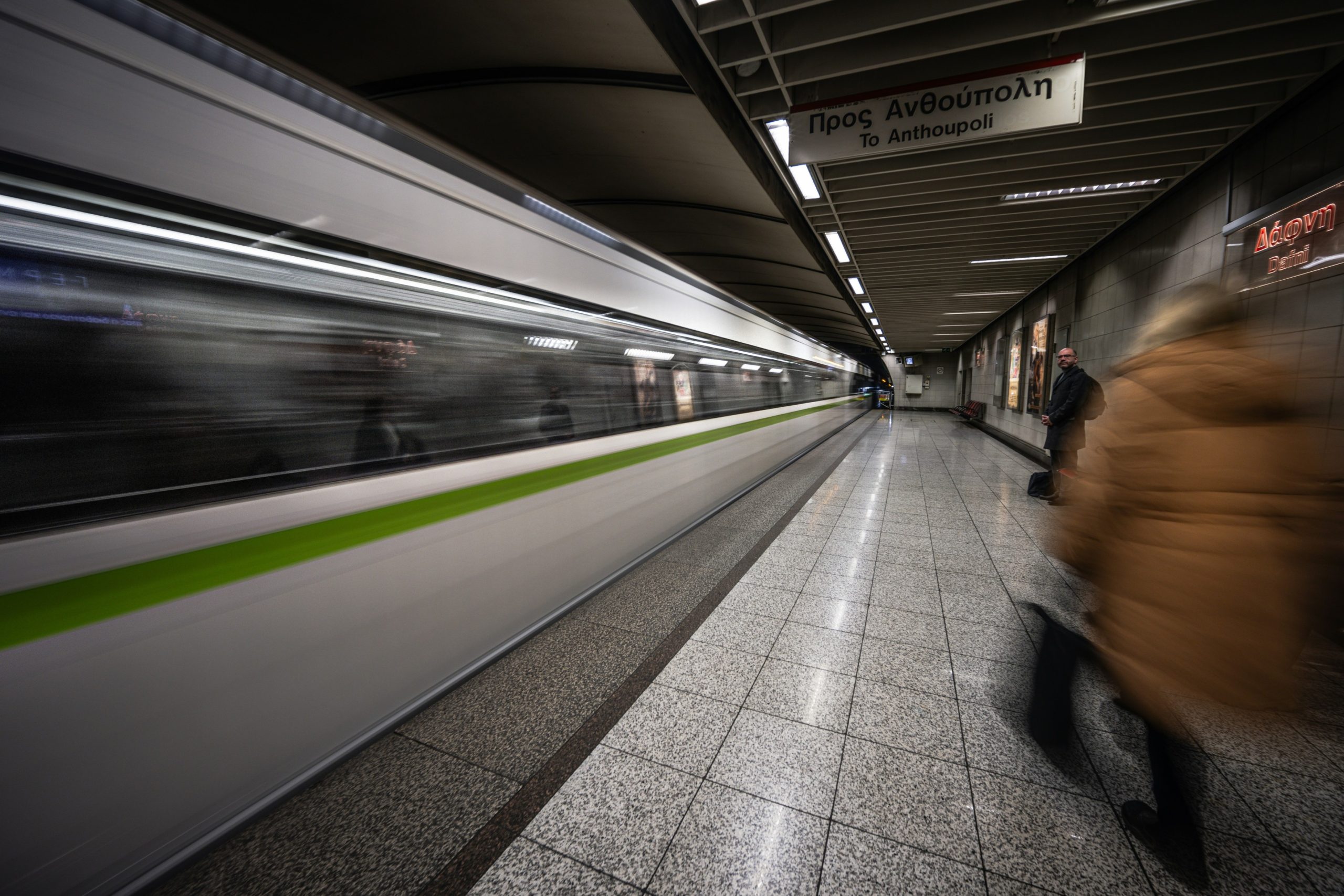

Whether you’re planning a trip to Athens or already exploring the city, getting around the Greek capital is easier than you might expect. The blue-and-white signs of the Athens Metro are often your first clue that navigating between ancient landmarks, lively neighbourhoods and the port of Piraeus doesn’t have to mean battling traffic or spending your day in taxis.
Fast, affordable and surprisingly interesting, the Metro is one of the most useful ways to experience Athens — particularly during the hot summer months.
The Athens Metro network consists of three main lines, each identified by colour. Line 1 (green) connects Kifissia in the north with Piraeus, making it particularly useful if you are catching a ferry to the Greek islands. It also stops at Monastiraki, placing you within easy reach of the Ancient Agora, Plaka and the famous flea market.
Line 2 (red) is one of the most useful lines for sightseeing. It connects major stops including Acropoli, Syntagma, Panepistimio and Omonia. Get off at Acropoli for the Acropolis Museum and the southern entrance to the Acropolis, or at Syntagma for Parliament, the National Garden and the heart of central Athens.
Line 3 (blue) connects Athens International Airport with the city centre, stopping at places such as Syntagma, Monastiraki and Evangelismos. Airport trains are clearly marked, although not every Line 3 service travels all the way to the airport, so check the electronic signs before boarding.
One of the Metro’s greatest advantages is how easy it is to transfer between lines. Syntagma connects Lines 2 and 3, Monastiraki connects Lines 1 and 3, while Omonia connects Lines 1 and 2.
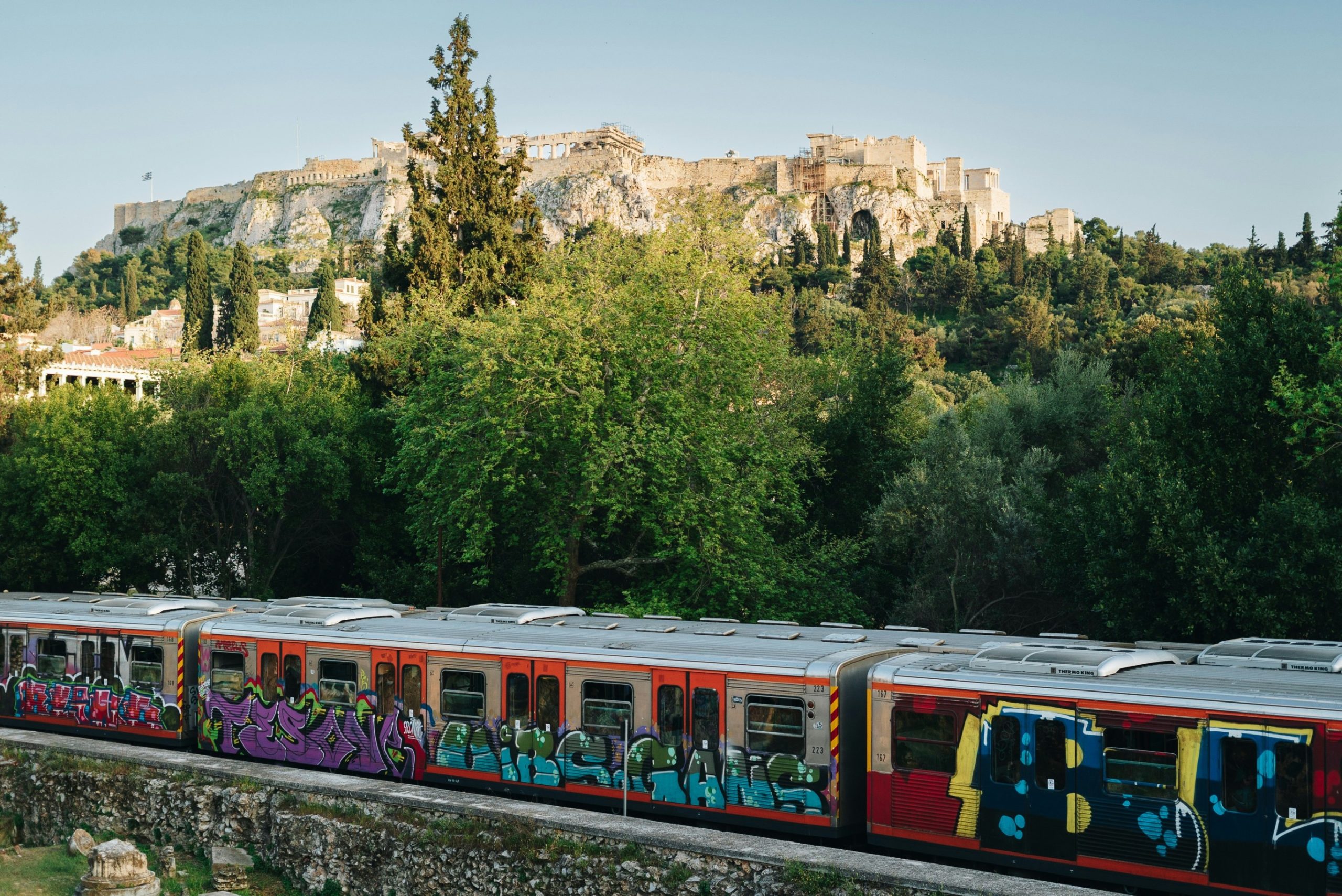
There is also an unexpected cultural bonus. Several Athens Metro stations feature archaeological discoveries and artworks, offering travellers a glimpse into the city’s past before they have even reached street level. At Syntagma, archaeological finds uncovered during construction are displayed within the station, while Acropoli features references to the ancient world above.
For first-time visitors, choosing the right station can make a sightseeing day much easier. Monastiraki is ideal for the Ancient Agora and Plaka, Acropoli for the Acropolis, Syntagma for central attractions, and Evangelismos for exploring Kolonaki.
And if Athens is only the beginning of your Greek adventure, Line 1 provides a convenient connection to Piraeus, where ferries depart for many of the country’s islands. Just allow plenty of time to find your correct gate once you arrive at the port.
The Metro may not take you everywhere — Athens is still a city best discovered on foot — but it provides the perfect backbone for exploring it. Whether you’re arriving in Athens for the first time or simply looking for an easier way to get around during your stay, hop on, choose your stop and let the city unfold above ground.


