
You can spend $1,800 on a Greece trip and feel like you planned smart – or spend $6,000 and still wonder where the money went. That is why “how much does a trip to Greece cost” is not a simple question. Greece can be surprisingly accessible if you choose the right islands, season, and pace, but it can also become one of Europe’s pricier warm-weather escapes once premium hotels, private transfers, and peak-summer ferry schedules enter the picture.
For most US travelers, the real answer sits somewhere between budget fantasy and Santorini-at-sunset excess. A one-week trip for one person often lands around $2,000 to $3,500 including flights, mid-range hotels, transportation, food, and a few paid experiences. Stretch to 10 nights with two or three destinations, and the number rises quickly. The key is not just what you spend, but where you spend it.
If you want a realistic planning range, think in daily averages before flights. Budget travelers who stay in simple guesthouses, use ferries selectively, eat at casual tavernas, and avoid the most in-demand islands in July and August may spend around $100 to $180 per day. Mid-range travelers usually land between $200 and $350 per day, especially if they want well-located hotels, some domestic flights or fast ferries, and dinners with a sea view. Luxury travelers can easily spend $500 a day and far beyond, particularly in places where villa stays and design hotels shape the market.
Flights from the US are often the biggest variable. In shoulder season, roundtrip fares to Athens can sometimes be found from roughly $600 to $900 from major gateways. In peak summer, especially with late booking, those fares may climb to $1,100 to $1,600 or more. If your trip includes a direct long-haul route, premium timing, or open-jaw tickets, expect the upper end.
Accommodation is the second major driver. In Athens, you can still find attractive boutique hotels and polished apartments at rates that feel fair by European capital standards. On islands such as Mykonos and Santorini, the same budget may buy far less space, fewer amenities, and a much less central location. That contrast catches a lot of first-time visitors off guard.
The biggest costs to plan for
Flights from the US to Greece

Athens is usually the most cost-effective entry point. Flying into Athens and then continuing onward tends to offer more flexibility than trying to route directly to an island from the US on one ticket. If you are traveling in May, early June, late September, or October, airfare can be noticeably softer than midsummer.
Departure city matters too. Travelers leaving from New York, Boston, Chicago, or other large international hubs often see better fares than those starting in smaller US markets. If you need a domestic connection before crossing the Atlantic, build that into your estimate from the start.
Hotels and villas

In Athens, solid mid-range hotels often start around $130 to $220 per night depending on neighborhood and season. On less saturated islands or the mainland, that same price can secure something charming, design-forward, or closer to the water. In Santorini and Mykonos, however, even relatively simple rooms can sit in that range during high season, while sought-after cave hotels, caldera suites, and beach properties move far beyond it.
A couple traveling for a week can therefore see a major difference depending on destination mix. Split your time between Athens and Naxos, and your hotel budget may feel manageable. Replace Naxos with Mykonos in August, and the lodging total can jump dramatically without changing the length of the trip.
Ferries, domestic flights, and getting around
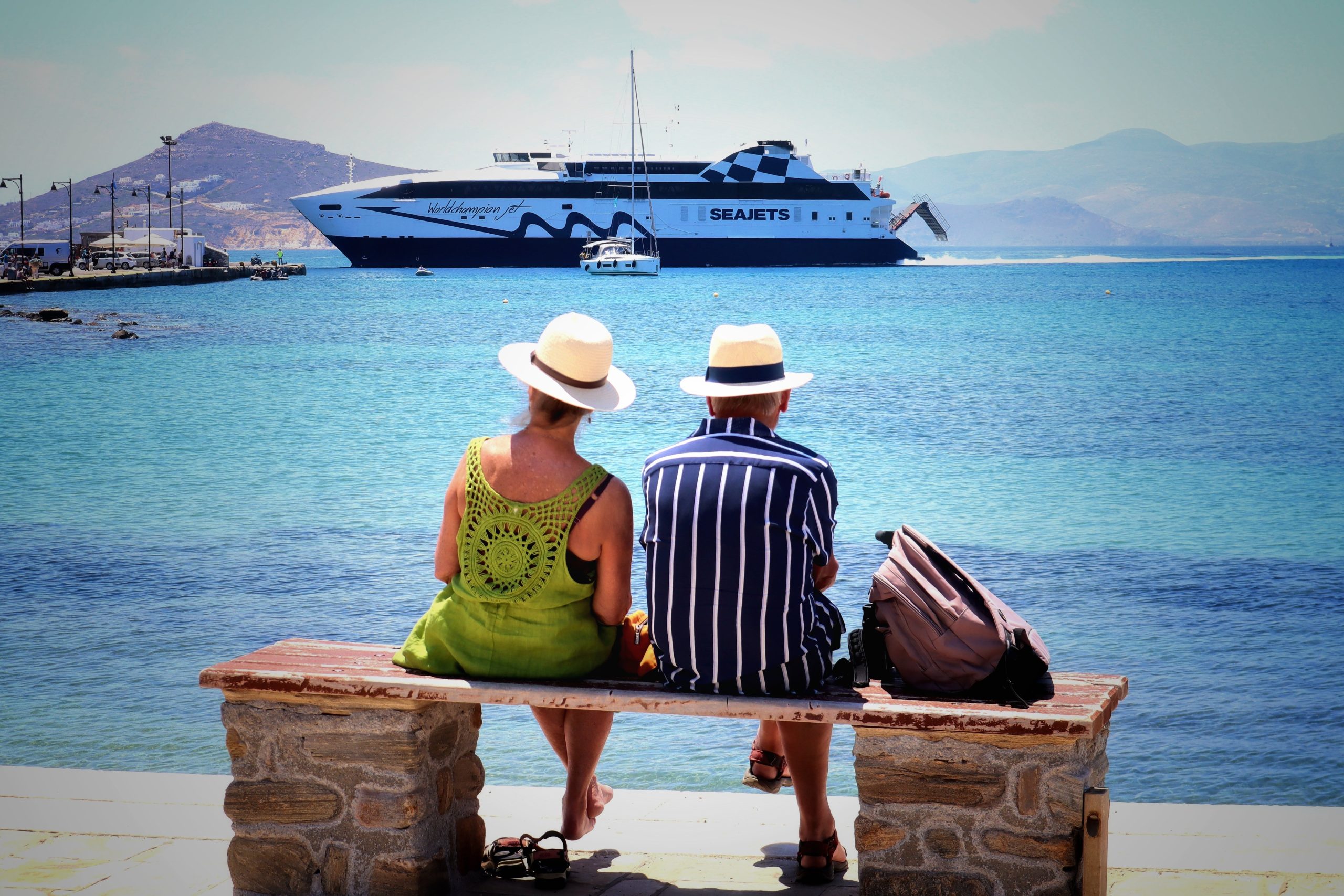
This is where many Greece budgets drift upward. Island hopping looks romantic on paper, but each move has a price. Standard ferries can be reasonable, while high-speed ferries cost more and often save less time than travelers expect once port transfers and boarding are factored in. Domestic flights may be worth it for longer routes, especially if your itinerary connects distant islands or returns to Athens.
Then there is the local transportation layer. Taxis on islands, hotel transfers, rental cars, and parking can add up fast, particularly if you choose places where beaches and villages are spread out. Some islands reward travelers who rent a car for a few days. In Athens, by contrast, you may not need one at all.
Food and drinks

One of Greece’s pleasures is that eating well does not always require a large budget. A casual lunch of souvlaki, pies, or meze can be quite affordable, and neighborhood tavernas still offer strong value in many destinations. But waterfront dining, polished wine lists, and beach club settings shift the equation quickly.
A modest daily food budget might be $35 to $60 per person if you mix bakery breakfasts, casual lunches, and simple dinners. A more comfortable range is $70 to $120 per person per day if you want a few longer meals, seafood, cocktails, or restaurants in prime locations. On the most famous islands, prices often reflect the view as much as the menu.
Greece trip budgets by travel style
Budget trip
A budget Greece trip works best when you travel in shoulder season, base yourself in fewer places, and prioritize value-rich destinations. Think Athens plus one island such as Naxos, Syros, or Paros outside peak dates, or combine Athens with a mainland region like Nafplio or the Peloponnese.
For a solo traveler on a seven-night trip, a rough total might be $1,600 to $2,300 including roundtrip airfare, modest accommodations, public transport, simple meals, and a few entry tickets. For two people sharing rooms, the per-person total can improve, especially on lodging.
Mid-range trip
This is where many readers will land. A mid-range Greece trip usually includes comfortable boutique hotels, a balanced mix of tavernas and stylish restaurants, at least one paid excursion, and either a domestic flight or a couple of ferry segments.
For one person, seven to nine nights often comes to about $2,500 to $4,000 including flights. For a couple, the total trip cost may sit around $4,500 to $7,000 depending on island choice, hotel standards, and how much moving around you do.
Luxury trip
Luxury in Greece can mean very different things. In Athens, it might mean a refined city hotel with Acropolis views and private transfers. On islands, it often means cliffside suites, villas with plunge pools, yacht charters, beach clubs, and fine dining reservations at the height of summer.
At that level, a week for two can easily start around $8,000 and move upward with very little resistance. Santorini, Mykonos, and high-design new openings tend to shape the upper end of the market.
Destination matters more than many travelers expect
If you are asking how much does a trip to Greece cost, the most useful follow-up question is this: which Greece? The Greece of central Athens, mountain villages, and lesser-known Cycladic islands is priced very differently from the Greece of famous caldera hotels and curated beach scenes.
Santorini and Mykonos are the obvious premium examples, but they are not the whole story. Crete can be more flexible because it has scale, range, and accommodation variety. Naxos often delivers strong value for beaches, food, and village atmosphere. Paros has risen in profile and prices, though it can still offer more range than Mykonos. Mainland stays, from Athens to the Peloponnese, often make a Greece itinerary feel richer and less financially compressed.
When you go changes the budget
Seasonality is everything in Greece. July and August bring the highest accommodation rates, busy ferries, and tighter availability. June and September often strike the best balance between warm weather and saner pricing, though top properties still command premium rates. May and October can offer excellent value in Athens, Crete, and many mainland destinations, but some island businesses may operate on reduced schedules.
This is one of the clearest trade-offs. Peak summer gives you long beach days and a full social atmosphere, but you pay for it. Shoulder season gives you breathing room, easier reservations, and often better hotel value, though sea temperatures and ferry frequency may vary.
Smart ways to keep the cost down without flattening the experience
The easiest way to overspend in Greece is to change hotels too often. Every transfer introduces ferry tickets, port taxis, baggage handling, and the hidden cost of lost time. Two destinations in a week usually feels smoother and cheaper than trying to sample four.
Choosing one headline island and one value-driven base also works well. Pair Athens with Naxos instead of combining Santorini, Mykonos, and Paros in a short trip. Book accommodations early for summer. Travel just outside peak dates if you can. And save your splurges for the moments that matter most to you, whether that is a caldera-view hotel for one night, a memorable seafood lunch, or a private sailing day.
Greece rewards selectivity. You do not need to do everything at once to feel the country’s beauty, rhythm, and depth. Often the best-planned trip is the one that leaves room in the budget for one more slow dinner by the water.