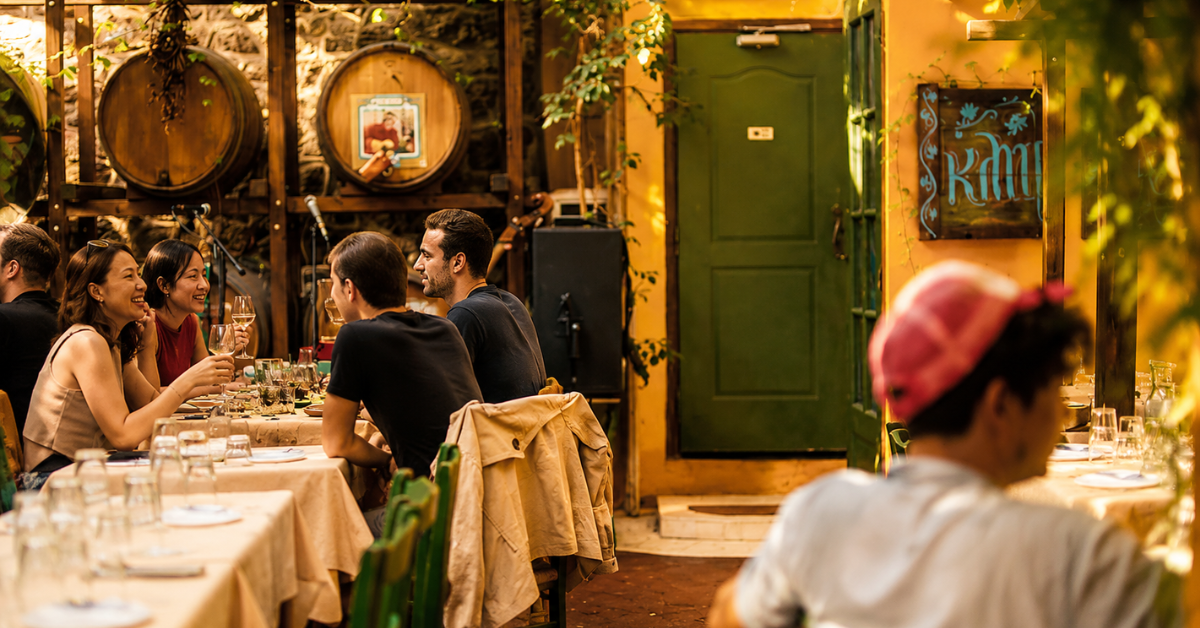

The taverna is the beating heart of Greece. Whether tucked into a quiet mountain village, perched on an island cliff, or hidden in a bustling backstreet of Athens, the taverna serves as the nation’s shared living room. It is where life unfolds over multi-hour meals and late-night, wine-fueled debates.
To a visitor, the experience can seem chaotic, but there is a profound, centuries-old rhythm to dining here. If you want to move beyond the laminated menus of tourist traps, you must learn to navigate this essential social institution.
The Art of the Order
The first rule of a true taverna is to look beyond the static menu. Don’t be afraid to ask your server for recommendations. In many authentic spots, the kitchen’s offerings change daily based on seasonal availability. Simply ask, “Ti echete freshko?” (What do you have fresh?) or ask for the mageirefta, the “cooked” dishes that were prepared earlier in the day. These are often the true pride of the kitchen, capturing the flavors of the season far better than the standard grilled items.
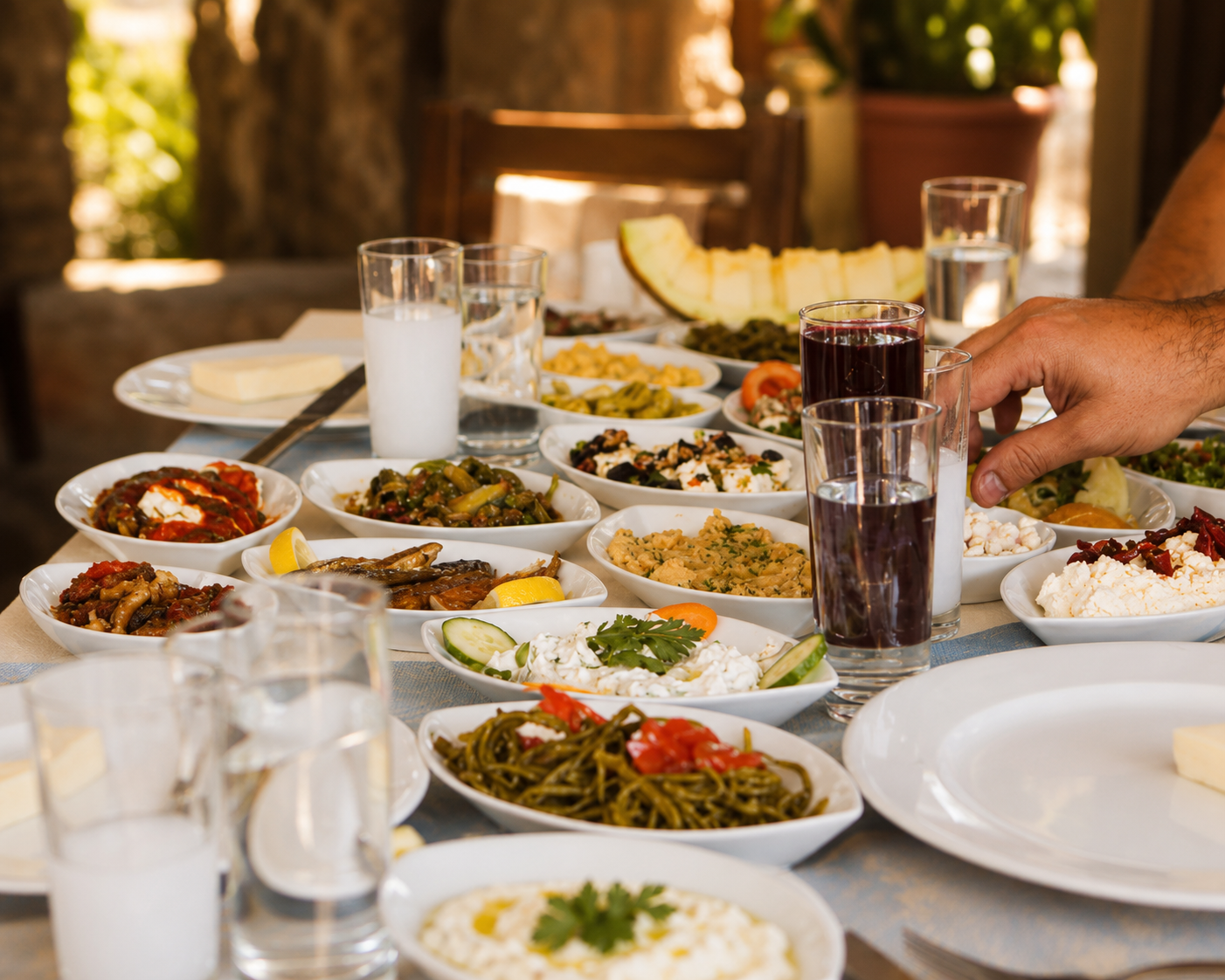
When ordering, remember that the table is communal. Rather than ordering individual main courses, select a variety of mezedes (small plates) for the center of the table. The goal is to create a vibrant spread that allows everyone to sample, share, and linger.
Regional Specialties: Beyond the Gyro
While the gyro is a convenient street-food staple, it rarely reflects the true depth of Greek home cooking. To eat like a local, seek out these soulful staples:
-
-
Horta: These wild mountain greens, simply boiled and served with copious amounts of high-quality local olive oil and fresh lemon, are the quintessential taste of the Greek countryside. Each season brings different varieties, offering a delicate, earthy bitterness.
-
Ladera: This term literally means “oily” dishes. These are vegetables—such as okra (bamies), green beans (fasolakia), or artichokes (angináres)—slow-cooked in a rich tomato, herb, and olive oil base. They are traditionally eaten at room temperature or slightly warm, making them perfect for hot days. Don’t skip the crusty bread; it is essential for mopping up the flavorful, oil-rich sauce.
-
Saganaki & Fried Delights: Beyond the famous fried cheese (saganaki), look for kolokithokeftedes (zucchini fritters) or tomatokeftedes (tomato fritters, especially common in the Cyclades). These are often bound with local herbs like mint and dill, showcasing how the simplest ingredients can be transformed.
-
Slow-Cooked Meats: Keep an eye out for kleftiko (slow-roasted lamb) or stifado (a rich, aromatic beef or rabbit stew flavored with pearl onions, vinegar, and cinnamon). These dishes require hours of preparation and offer a depth of flavor that defines Greek comfort food.
-
Local Cheeses & House Wine: Every region has a pride-and-joy cheese, from the nutty graviera of Crete to the salty, crumbly kalathaki of Lemnos. Always pair your meal with the hima (bulk) wine. Often produced by the owner’s family or a nearby vineyard, it is the most honest, affordable, and refreshing expression of the local terroir.
Where Meals Become Memories
Pacing is everything in Greece. Meals are not about eating quickly, they are about conversation, connection, and lingering at the table. In a traditional Greek taverna, there is little emphasis on turning tables to seat the next guests. Once you’re seated, the table is yours for as long as you wish to stay.
For the same reason, don’t expect the bill to arrive automatically. Bringing the check before you’ve asked for it would be considered impolite, as it suggests you’re being rushed. Instead, relax, pour another glass of wine, and savor the moment. In Greece, there is always time for one more story.
-